By using MoodChangeMedicine.com, you agree to accept this website’s terms of use, which can be viewed here.
May 16, 2024
By Joie Meissner ND, BCB-L
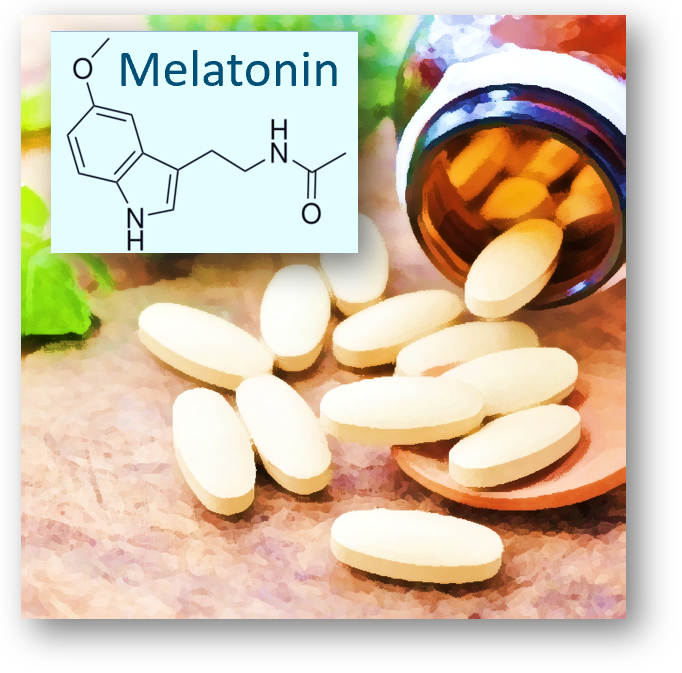
Taking melatonin short-term does appear to be safe for most people, according to the National Institute of Health’s National Center for Complementary and Integrative Health website updated July 2022. 1
Given its modest benefits for most people with insomnia, melatonin supplementation may be best used short-term to augment the effects of more effective treatments such as cognitive behavioral therapy for insomnia (CBT-I) treatment.
A 2023 scientific review of studies on melatonin supplementation concluded that: “Melatonin taken in low to moderate doses (5 mg daily or less) appears safe for short- and long-term use.” But these reviewers—experts in pharmacology, family and internal medicine and anesthesiology—further concluded that that the long-term effects of melatonin supplementation have been “insufficiently studied.” 2
Links to more information on melatonin:
Natural Melatonin vs. Supplements
Drug interactions & Precautions

One to five mg melatonin capsules and tablets seem to be the most common formulations sold at supplement stores and online retail markets. Some experts assert that higher doses may be safe. But it would appear that higher doses are more risky than lower ones and should be used over shorter periods of time.
Citing the results of 39 studies including scientific reviews, an expert panel at NatMed Pro drew similar, albeit more specific conclusions, namely that melatonin is likely safe “when used orally and appropriately, short-term or as a single dose. Melatonin seems to be safe when used up to 8 mg daily for up to 6 months. Melatonin 10 mg daily has been used safely for up to 2 months.” 3
NatMed Pro experts further concluded that: melatonin supplementation is possibly safe “when doses of up to 8 mg daily are used orally and appropriately for longer than 6 months, doses of 10 mg daily are used for longer than 2 months, or doses of 50 mg daily are used for up to 5 days. They add that some evidence exists suggesting that “melatonin can be used safely in doses of up to 10 mg daily for up to 2 years in some patients. 4
Ten mg seems like a large dose of melatonin for the purpose of decreasing the time needed to fall asleep when less than 5 mg would probably work as well for most people. There’s a wide variability in the supplement’s bioavailability, the extent to which melatonin from supplements is available for use by the body depending on genetic differences in how it is processed in the liver. 5
Other research suggests that short-term use is safest at any dose between 0.5 to 7.7 mg. Researchers examining the pooled data from 17 randomized-controlled trials with 651 participants with secondary sleep disorders concluded that melatonin “showed no evidence of adverse effects of melatonin with short term use (3 months or less).” 6
These same researchers also found that melatonin wasn’t helpful for sleep problems caused by things like shiftwork, dementia, chronic pain or depression (secondary sleep disorders). 7
Speaking to the issue of safety of short and long-term use, the expert authors of the 2023 scientific review found that: “short-term side effects of melatonin appear mild, resolve when stopping the medication, and do not limit its use in most cases. Many studies of the long-term use of melatonin have shown no difference in the incidence of long-term side effects between exogenous melatonin and placebo.” 8
Given that long-term studies on melatonin supplementation are in short supply and given that it may be helpful—particularly in older people—it is an open question for research as to whether or not long-term melatonin replacement therapy is safe for those over 55.

In 2008, using the rationale that most studies of melatonin had been small and of limited duration, American Academy of Sleep Medicine (AASM) declared that there was a lack of data on safety and efficacy of melatonin. 9 In 2017, AASM endorsed melatonin supplements for circadian rhythm disorders, where people’s sleep clocks are disrupted. But citing the same rationale as in 2008, they continued to avoid endorsing melatonin for sleep onset or sleep maintenance insomnia (primary insomnia). 10
Both American sleep specialists and British psychopharmacologists endorse CBT-I as first-line treatment for chronic insomnia. Curiously, while the American sleep experts weakly recommend pharmaceuticals for chronic insomnia and only for use with CBT-I, they’re not big on melatonin supplementation to support treatment using CBT-I. Not so with the British pharmacology experts. 11
A 2010 consensus statement from the British Association for Psychopharmacology assessed treatments for chronic insomnia. They gave a first-line endorsement to prolonged-release melatonin for insomnia in persons over 55. 12
But mainline pharmaceuticals did not fare so well with the British psychopharmacologists. Due to the lack of evidence of efficacy for long-term use of sleep meds, concerns about toxicity and the occurrence of rebound insomnia related to discontinuation of these sleep drugs, they did not endorse the pharmaceuticals. 13
Melatonin appears to be a safe medication in older adults compared to other commonly prescribed medications in this age group such as sleep medications, anxiety and depression medications, antipsychotics and blood-thinning drugs, according to an American Geriatric Society 2019 guideline on medication use. 14
The National Institutes of Health’s website notes that: “Melatonin may stay active in older people longer than in younger people and cause daytime drowsiness.” 15
Melatonin’s side-effects are vanishingly tiny compared to those of the most commonly prescribed pharmaceuticals used to treat adults with chronic insomnia.
While studies show that long-term risk of using sleep drugs can pose serious health risks, there are few long-term safety studies of melatonin. Melatonin may not have undergone study of similar rigor to that of FDA-approved pharmaceuticals. But unlike some of the pharmaceutical sleep meds, melatonin has no black-box warnings about serious side-effects such as sleep driving or an association with an increase in all-cause-mortality. And melatonin does not cause withdrawal symptoms like rebound insomnia, a common characteristic of the most frequently prescribed sleep drugs.
It would appear that if one desires to take a pill to help with sleep, melatonin is a safer choice than most sleep drugs.
Always consult a physician or qualified healthcare provider who knows about your health conditions before starting or stopping any medication or supplement.
Questions about Safety of Melatonin Supplements for Certain People
Due to a lack of research on the safety of melatonin use in pregnant or breastfeeding women, and in women who wish to become pregnant, there are questions about melatonin use in this population.
Frequent, high-dose use of melatonin could inhibit ovulation presenting a problem in those wishing to become pregnant. Very high doses of melatonin 75-300 mg daily may cause a contraceptive effect. The safety of melatonin supplementation during pregnancy and breast feeding is unknown. 16
While long-term use may be beneficial as we age, there are questions regarding the safety of long-term melatonin supplementation in children.
The National Center for Complementary and Integrative Health—a division of the NIH—explains that there is a lack of long-term studies in children. Their website states: “Because melatonin is a hormone, it’s possible that melatonin supplements could affect hormonal development, including puberty, menstrual cycles, and overproduction of the hormone prolactin, but we don’t know for sure.” 17 “Due to potential risks, melatonin should be used only in children with a medical reason for use; it should not be used to promote sleep in otherwise healthy children,” according to an expert panel. 18
The NIH website also notes that: “the 2015 guidelines by the American Academy of Sleep Medicine recommend against melatonin use by people with dementia.” 19
There are theoretical and unknown risks in taking melatonin supplements in people with:
- Bleeding disorders
- Depression
- High blood pressure on certain medications
- Seizure disorders, epilepsy or children with multiple neurological disorders
- Transplant recipients
- Osteoporosis or low bone-mineral density
The above is not an all-inclusive description of every health condition that can pose higher risk for melatonin supplementation. Always consult a physician or qualified healthcare provider who knows about your health conditions before starting or stopping any medication or supplement.
Like all supplements and drugs, melatonin has the possibility for side-effects; interactions with drugs and supplements; risks associated with purity & potency; reports of adverse events; and there are particular concerns related to taking it.
The link below provides further information on some of melatonin’s interactions with drugs and supplements as well as some precautions for melatonin use:
Care informed by the understanding that emotional and physical wellbeing are deeply connected
________________________________________________________________________________________________________________
Citations
- “Melatonin: What You Need To Know.” National Institute of Health, National Center for Complementary and Integrative Health website. updated July 2022. Accessed Jan 8, 2024 nccih.nih.gov. ↩︎
- Givler D, Givler A, Luther PM, Wenger DM, Ahmadzadeh S, Shekoohi S, Edinoff AN, Dorius BK, Jean Baptiste C, Cornett EM, Kaye AM, Kaye AD. “Chronic Administration of Melatonin: Physiological and Clinical Considerations.” Neurol Int. 2023 Mar 15;15(1):518-533. doi: 10.3390/neurolint15010031. PMID: 36976674; PMCID: PMC10053496. ↩︎
- “Melatonin Monograph” NatMed Pro Therapeutic Research Center database 3/8/2024. Last modified on 3/7/2024, accessed April 2024. ↩︎
- “Melatonin Monograph” NatMed Pro Therapeutic Research Center database 3/8/2024. Last modified on 3/7/2024, accessed April 2024. ↩︎
- DeMuro RL, Nafziger AN, Blask DE, Menhinick AM, Bertino JS Jr. “The absolute bioavailability of oral melatonin.” J Clin Pharmacol. 2000 Jul;40(7):781-4. doi: 10.1177/00912700022009422. PubMed 10883420 ↩︎
- Buscemi N, Vandermeer B, Hooton N, Pandya R, Tjosvold L, Hartling L, et al. “Efficacy and safety of exogenous melatonin for secondary sleep disorders and sleep disorders accompanying sleep restriction: meta-analysis.” BMJ. 2006 Feb 18. 332(7538):385-93. PMC1370968 ↩︎
- Buscemi N, Vandermeer B, Hooton N, Pandya R, Tjosvold L, Hartling L, et al. “Efficacy and safety of exogenous melatonin for secondary sleep disorders and sleep disorders accompanying sleep restriction: meta-analysis.” BMJ. 2006 Feb 18. 332(7538):385-93. PMC1370968 ↩︎
- Givler D, Givler A, Luther PM, Wenger DM, Ahmadzadeh S, Shekoohi S, Edinoff AN, Dorius BK, Jean Baptiste C, Cornett EM, Kaye AM, Kaye AD. “Chronic Administration of Melatonin: Physiological and Clinical Considerations.” Neurol Int. 2023 Mar 15;15(1):518-533. doi: 10.3390/neurolint15010031. PMID: 36976674; PMCID: PMC10053496. ↩︎
- Schutte-Rodin S, Broch L, Buysse D, Dorsey C, Sateia M. “Clinical guideline for the evaluation and management of chronic insomnia in adults.” J Clin Sleep Med. 2008 Oct 15. 4(5):487-504. [Guideline] ↩︎
- Sateia MJ, Buysse DJ, Krystal AD, Neubauer DN, Heald JL. “Clinical Practice Guideline for the Pharmacologic Treatment of Chronic Insomnia in Adults: An American Academy of Sleep Medicine Clinical Practice Guideline.” J Clin Sleep Med. 2017 Feb 15. 13 (2):307-349. ↩︎
- Wilson SJ, Nutt DJ, Alford C, et al. “British Association for Psychopharmacology consensus statement on evidence-based treatment of insomnia, parasomnias and circadian rhythm disorders.” J Psychopharmacol. 2010;2411:1577-1601, 20813762. ↩︎
- Wilson SJ, Nutt DJ, Alford C, et al. “British Association for Psychopharmacology consensus statement on evidence-based treatment of insomnia, parasomnias and circadian rhythm disorders.” J Psychopharmacol. 2010;2411:1577-1601, 20813762. ↩︎
- Wilson SJ, Nutt DJ, Alford C, et al. “British Association for Psychopharmacology consensus statement on evidence-based treatment of insomnia, parasomnias and circadian rhythm disorders.” J Psychopharmacol. 2010;2411:1577-1601, 20813762. ↩︎
- American Geriatrics Society. “2019 updated AGS beers criteria® for potentially inappropriate medication use in older adults.” J Am Geriatr Soc. 2019;67(4):674–694. doi: 10.1111/jgs.15767 [PubMed] [CrossRef] [Google Scholar] ↩︎
- “Melatonin: What You Need To Know.” National Institute of Health, National Center for Complementary and Integrative Health website. updated July 2022. Accessed Jan 8, 2024 nccih.nih.gov. ↩︎
- “Melatonin Monograph” NatMed Pro Therapeutic Research Center database 3/8/2024. Last modified on 3/7/2024, accessed April 2024. ↩︎
- “Melatonin: What You Need To Know.” National Institute of Health, National Center for Complementary and Integrative Health website. updated July 2022. Accessed Jan 8, 2024 nccih.nih.gov. ↩︎
- “Melatonin Monograph” NatMed Pro Therapeutic Research Center database 3/8/2024. Last modified on 3/7/2024, accessed April 2024. ↩︎
- “Melatonin: What You Need To Know.” National Institute of Health, National Center for Complementary and Integrative Health website. updated July 2022. Accessed Jan 8, 2024 nccih.nih.gov. ↩︎

 Mood Change Medicine
Discussion
No comments yet.