By using MoodChangeMedicine.com, you agree to accept this website’s terms of use, which can be viewed here
May 19, 2024
By Joie Meissner ND, BCB-L
SNAP SHOT

- Evidence for social anxiety disorder and CBD is promising. For people taking anti-anxiety medications long-term to address social anxiety, CBD might provide a safer option than the pharmaceutical antidepressants like Prozac or Paxil, which are often prescribed for anxiety. But long-term, safety data for CBD are lacking.
- CBD works within hours to provide speedier relief compared to that of the antidepressant SSRI and SNRI drugs, which can take weeks to work. And CBD appears to be much safer than benzodiazepine drugs like Valium and Xanax.
- There is a lack of evidence to conclude that cannabinoid mixtures containing both CBD and THC are effective for the range of anxiety disorders. The risks rise with any cannabinoid product containing THC as its dose rises.
- Given the harmful side effects of the pharmaceuticals, pure CBD or full-spectrum CBD with very low THC content (such as mail-order products) might provide a safer alternative, though long-term safety studies are lacking.
- Talk therapy has no safety concerns and provides much longer lasting benefits than pills or tinctures.

Are cannabinoids effective for anxiety?
A number of studies have provided evidence for the efficacy of cannabinoids in the treatment of anxiety.
In a 2011 study of participants who had social anxiety disorder (SAD), CBD reduced the anxiety of the SAD subjects to the same levels as those in the control group who didn’t have SAD. 1
“CBD administration significantly decreased anxiety without co-occurring sedation” in both healthy people and those with social anxiety disorder, a 2022 systematic review of seven randomized controlled trials concluded. 2 These benefits happen without the harmful side effects found in the anti-anxiety medications— benzodiazepines—such as impaired thinking, coordination, or the risk of dependence or addiction, the researchers said . And CBD lacks the benzos’ potential for fatal interactions with alcohol and opioids.
The systematic review looked at studies which asked people to do stressful public speaking. Some of the people had social anxiety disorder, some did not.
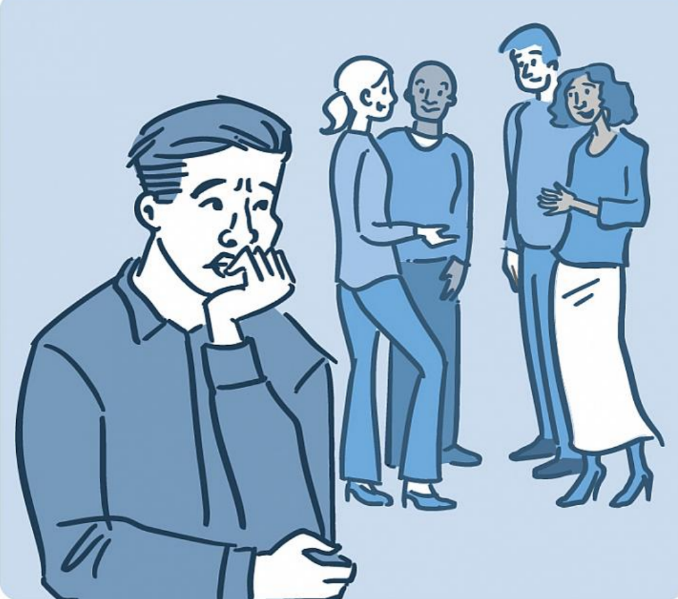
Social anxiety can be so intense that it is marked by fear or anxiety that interferes with your job and your relationships. When that happens, it’s social anxiety disorder and it’s a state that people live with day in and day out.
Of course, people without the disorder can experience social anxiety. Lots of people feel anxious about public speaking. Interestingly, this review showed that CBD cut anxiety for both people with the disorder and also for those without it. 3
Part of what provides long-term relief from anxiety disorders in particular is directly facing anxious feelings. Taking a substance that causes temporary relief keeps the anxiety going and can cause anxious feelings to persist and worsen in intensity over time.
And the quicker and deeper the anxiety relief from taking a substance, the greater the potential detriment to recovering from an anxiety disorder.
This holds true for CBD and even more so for powerful benzos like Xanax (alprazolam) and Klonopin (clonazepam).
It’s one thing to take benzos relatively rarely like before having an MRI or getting on plane if you’re afraid to fly. But it’s another thing if you take them frequently. They appear to be much riskier than CBD. However, long-term studies of CBD safety are lacking.
SSRIs (Serotonin-reuptake inhibitors) like Paxil (paroxetine), Celexa (citalopram) and others as well as SNRIs (Serotonin and norepinephrine reuptake inhibitors) like Effexor (venlafaxine) and Cymbalta (duloxetine), which were first approved by the FDA for depression, are also often prescribed to treat anxiety disorders. They have a lot of side-effects, but are safer than benzodiazepines for long-term use. For many reasons, including side-effects, many people discontinue using these drugs.
Emotional blunting is frequently reported as an SSRI side effect. Though they might work to blunt your anxiety, they might also blunt the pleasure taken in life.
In people who take these SSRIs and SNRIs for six weeks or longer, it was thought that abrupt discontinuation would lead to short-lived withdrawal symptoms—the so-called “antidepressant discontinuation syndrome.” But now it’s believed that the symptoms are not short-lived and far from mild.
These withdrawal symptoms include insomnia, nausea, imbalance, sensory disturbances, elevation, arousal and more. This syndrome reportedly happens in about 20 percent of people. 4, 5, 6
A 2020 article published in American Psychological Association said: “The thinking in the medical community was that patients could wean off these drugs with minor side effects, but anecdotally, many patients have reported troubling mental and physical withdrawal symptoms that last for months or even years.” 7
“The idea that these side effects last a couple of weeks is outrageously inaccurate. Withdrawal effects aren’t rare, they aren’t short-lived and they’ve been dismissed by drug companies for decades,” said the article—citing Professor of Clinical Psychology John Read of the University of East London. 8
Withdrawal effects have so far not been reported with CBD. 9
Talk therapy like cognitive behavioral therapy, (CBT) works as well as pharmaceuticals and without the side effects, research shows. And with drugs, anxiety can return when you stop taking the medication. Additional benefits of combining psychotherapy with medication are small, the evidence shows. 10 More recent research found CBT to be more effective than pharmaceuticals alone.

- Evidence for social anxiety disorder and CBD is promising. If you are opting to take something long-term to address social anxiety, CBD might provide a safer option than the pharmaceutical antidepressants, which are often prescribed for anxiety. But long-term, safety data for CBD are lacking.
- CBD works within hours to provide speedier relief compared to that of the antidepressant SSRI and SNRI drugs, which can take weeks to work. And CBD appears to be much safer than drugs like Valium and Xanax.
- Talk therapy has no safety concerns and provides much longer lasting benefits than pills or tinctures.
Are cannabinoids effective for people with other types of anxiety?
A 2015 systematic review published in the Journal of the American Medical Association (JAMA) analyzed 79 high-quality, randomized controlled trials using cannabinoids for numerous conditions. Only five of these studies collected data on anxiety. One study used CBD to treat social anxiety. The other four used other cannabinoids to treat chronic pain. The combined results of all five studies led the reviewers to conclude that cannabinoids reduced anxiety. 11 However, the review said four of the five studies had methodological problems that could potentially invalidate their results.
Since the 2015 systematic review, more research is yielding promising results for CBD’s efficacy for anxiety.
In 2020, doctors in New Zealand reported the results of clinical field research on the effects of a prescription CBD oil at varying doses in 253 of their patients who were dealing with a wide range of serious chronic conditions. Most of them had chronic pain that was resistant to treatment. 12
While the results of this audit were extremely promising, the lack of scientific rigor means this evidence cannot show that CBD caused these improvements, only that it was correlated to these improvements.
“Good to excellent benefit for relatively intractable conditions” was reported by 70% of the patients, the doctors said. The patients with non-cancer pain or mental health-related symptoms experienced significant improvement in anxiety, pain and depression, as well as in the ability to complete daily activities, the audit found.
“There were no major adverse effects,’’ the audit said. “Positive side effects included improved sleep and appetite.”
“This audit demonstrated the potential benefit of CBD in treating anxiety and pain,” the New Zealand doctors concluded. “The present study shows that it improves quality of life for a diverse range of patients. CBD in this population has been shown to be safe and well tolerated.”
But they warned that there were several limitations to their audit and that its results “should be interpreted with the appropriate caution.” 13
The audit is field research that does not pass scientific muster to determine the efficacy of CBD for any condition.
A trial of full-spectrum CBD containing THC being conducted at Harvard found very promising initial results, but it also must be interpreted with caution. The researchers investigating full-spectrum CBD oil for treatment of anxiety gave 14 patients with moderate to severe anxiety CBD for four weeks. 14
“Following four weeks of treatment, patients reported reduced anxiety as well as improvements in mood, sleep, quality of life, and measures reflecting their self-control and ability to think flexibly,” the study said. “Patients did not experience any serious negative effects during the trial.” 15
It’s too soon to conclude from this first, uncontrolled stage of the study that full-spectrum CBD works to treat anxiety. In part two of the study there will be a control group so that researchers will be able to tell if the changes in those given CBD are caused by the CBD or not. In the second stage—a randomized, double-blind placebo-controlled study—neither the patients nor the researchers will know who is getting the fake full-spectrum CBD (inert placebo) and who is getting the real, full-spectrum CBD. 16
Before the Harvard stage-two study, there has been only one study using a double-blind methodology to test CBD and it was on teens with social anxiety disorder. 17 It found evidence for anxiolytic effects.
The Harvard researchers testing full-spectrum CBD in adults with anxiety report that they expect a “definitive assessment of the impact of this novel treatment on clinical symptoms and cognition” to emerge from the double-blind, placebo-controlled stage. The second stage will be able to show whether their CBD formula caused improvements in anxiety for the patients in this study. 18
Because THC may increase anxiety at higher doses, caution is warranted when taking full-spectrum CBD or combination THC-CBD products if the product contains a high dose of THC. 19, 20

- Given the harmful side effects of the pharmaceuticals, pure CBD and full-spectrum CBD with very low THC content (such as mail-order products) might provide a safer alternative for general anxiety, though efficacy and long-term safety studies are lacking.
- Evidence for CBD’s efficacy for social anxiety is increasing.
- Taking any anti-anxiety supplement or drug runs the risk of making anxiety worse over the long term.
- Talk therapy has no safety concerns and provides much longer lasting benefits than pills or tinctures.
To find out about the safety of taking cannabinoids for anxiety, click link below:
Links to more information on cannabinoids (CBD & THC):
Cannabinoids: Anxiety, Depression & Sleep
Are cannabinoids effective for sleep?
Cannabinoids: Depression & Inflammation
How Safe are Inhaled Cannabinoids?
Side Effects, Drug & Supplement Interactions
CBD: Precautions & Drug Interactions
CBD: Is there a sweet spot for dosing?
Care informed by the understanding that emotional and physical wellbeing are deeply connected
________________________________________________________________________________________________________________
By using MoodChangeMedicine.com, you agree to accept this website’s terms of use, which can be viewed here
Citations
- Bergamaschi MM, Queiroz RH, Chagas MH, de Oliveira DC, De Martinis BS, Kapczinski F, Quevedo J, Roesler R, Schröder N, Nardi AE, Martín-Santos R, Hallak JE, Zuardi AW, Crippa JA. “Cannabidiol reduces the anxiety induced by simulated public speaking in treatment-naïve social phobia patients.” Neuropsychopharmacology. May, 2011. PubMed 21307846 ↩︎
- Fliegel, Danielle K., Lichenstein, Sarah D. “Systematic literature review of human studies assessing the efficacy of cannabidiol for social anxiety.” Psychiatry Research Communications. 2022. Vol. 2, Issue 4, 2022, doi.org/10.1016/j.psycom.2022.100074. (sciencedirect) ↩︎
- Fliegel, Danielle K., Lichenstein, Sarah D. “Systematic literature review of human studies assessing the efficacy of cannabidiol for social anxiety.” Psychiatry Research Communications. 2022. Vol. 2, Issue 4, 2022, doi.org/10.1016/j.psycom.2022.100074. (sciencedirect) ↩︎
- Thompson C. “Discontinuation of antidepressant therapy: emerging complications and their relevance.” J Clin Psychiatry. 1998;59:541-8. ↩︎
- Garner EM, Kelly MW, Thompson DF. “Tricyclic antidepressant withdrawal syndrome.” Ann Pharmacother. 1993;27:1068-72. ↩︎
- Agelink MW, Zitzelsberger A, Klisser E. “Withdrawal syndrome after discontinuation of venlafaxine.” Am J Psychiatry. 1997;154:1473-4. ↩︎
- Weir, Kirsten. “How hard is it to stop antidepressants? New research suggests antidepressant withdrawal symptoms might be more common, more severe and longer lasting than previously realized.” Monitor on Psychology. 2020. Vol. 51, No. 3. April 2020. American Psychological Association. Accessed February. 2024. ↩︎
- Weir, Kirsten. “How hard is it to stop antidepressants? New research suggests antidepressant withdrawal symptoms might be more common, more severe and longer lasting than previously realized.” Monitor on Psychology. 2020. Vol. 51, No. 3. April 2020. American Psychological Association. Accessed February. 2024. ↩︎
- Fliegel, Danielle K., Lichenstein, Sarah D. “Systematic literature review of human studies assessing the efficacy of cannabidiol for social anxiety.” Psychiatry Research Communications. 2022.Vol. 2, Issue 4, 2022, doi.org/10.1016/j.psycom.2022.100074. (sciencedirect) ↩︎
- Leichsenring F., Steinert C., Rabung S., Ioannidis J.P.A. “The efficacy of psychotherapies and pharmacotherapies for mental disorders in adults: An umbrella review and meta-analytic evaluation of recent meta-analyses.” World Psychiatry. 2022;21:133–145. doi: 20941. [PMC free article] [PubMed] [CrossRef] [Google Scholar] ↩︎
- Whiting PF, Wolff RF, Deshpande S, et al. “Cannabinoids for Medical Use: A Systematic Review and Meta-analysis.” JAMA. 2015;313(24):2456–2473. doi:10.1001/jama.2015.6358 PubMed 26103030. ↩︎
- Gulbransen G, Xu W, Arroll B. “Cannabidiol prescription in clinical practice: an audit on the first 400 patients in New Zealand.” BJGP Open. 2020;4(1):bjgpopen20X101010. PMC7330185 ↩︎
- Gulbransen G, Xu W, Arroll B. “Cannabidiol prescription in clinical practice: an audit on the first 400 patients in New Zealand.” BJGP Open. 2020;4(1):bjgpopen20X101010. PMC7330185 ↩︎
- Dahlgren MK, Lambros AM, Smith RT, Sagar KA, El-Abboud C, Gruber SA. “Clinical and cognitive improvement following full-spectrum, high-cannabidiol treatment for anxiety: open-label data from a two-stage, phase 2 clinical trial.” Commun Med (Lond). 2022. Nov 2;2(1):139. doi: 10.1038/s43856-022-00202-8. PMID: 36352103; PMCID: PMC9628346. ↩︎
- Dahlgren MK, Lambros AM, Smith RT, Sagar KA, El-Abboud C, Gruber SA. “Clinical and cognitive improvement following full-spectrum, high-cannabidiol treatment for anxiety: open-label data from a two-stage, phase 2 clinical trial.” Commun Med (Lond). 2022. Nov 2;2(1):139. doi: 10.1038/s43856-022-00202-8. PMID: 36352103; PMCID: PMC9628346. ↩︎
- Dahlgren MK, Lambros AM, Smith RT, Sagar KA, El-Abboud C, Gruber SA. “Clinical and cognitive improvement following full-spectrum, high-cannabidiol treatment for anxiety: open-label data from a two-stage, phase 2 clinical trial.” Commun Med (Lond). 2022. Nov 2;2(1):139. doi: 10.1038/s43856-022-00202-8. PMID: 36352103; PMCID: PMC9628346. ↩︎
- Masataka N. “Anxiolytic effects of repeated cannabidiol treatment in teenagers with social anxiety disorders.” Front. Psychol. 2019. 0. 10.3389/fpsyg.2019.02466 (2019). [PMC free article] [PubMed] ↩︎
- Dahlgren MK, Lambros AM, Smith RT, Sagar KA, El-Abboud C, Gruber SA. “Clinical and cognitive improvement following full-spectrum, high-cannabidiol treatment for anxiety: open-label data from a two-stage, phase 2 clinical trial.” Commun Med (Lond). 2022. Nov 2;2(1):139. doi: 10.1038/s43856-022-00202-8. PMID: 36352103; PMCID: PMC9628346. ↩︎
- Kaul M, Zee PC, Sahni AS. “Effects of Cannabinoids on Sleep and their Therapeutic Potential for Sleep Disorders.” Neurotherapeutics. 2021. Jan;18(1):217-227. doi: 10.1007/s13311-021-01013-w. Epub 2021 Feb 12. PMID: 33580483; PMCID: PMC8116407 ↩︎
- Mullins MF. “Cannabis dabbing: An emerging trend.“ Nursing. 2021;51(5):46-50. View abstract. ↩︎

 Mood Change Medicine
Discussion
No comments yet.