By using MoodChangeMedicine.com, you agree to accept this website’s terms of use, which can be viewed here.
May 20, 2024
By Joie Meissner ND, BCB-L
Cannabinoids are naturally occurring constituents in the cannabis plant, also known as marijuana. There are over 100 types of cannabinoids found in the cannabis plant—delta-9 tetrahydrocannabinol (THC) and cannabidiol (CBD) are two major cannabinoids.
SNAP SHOT: CANNABINOIDS, DEPRESSION & ANXIETY
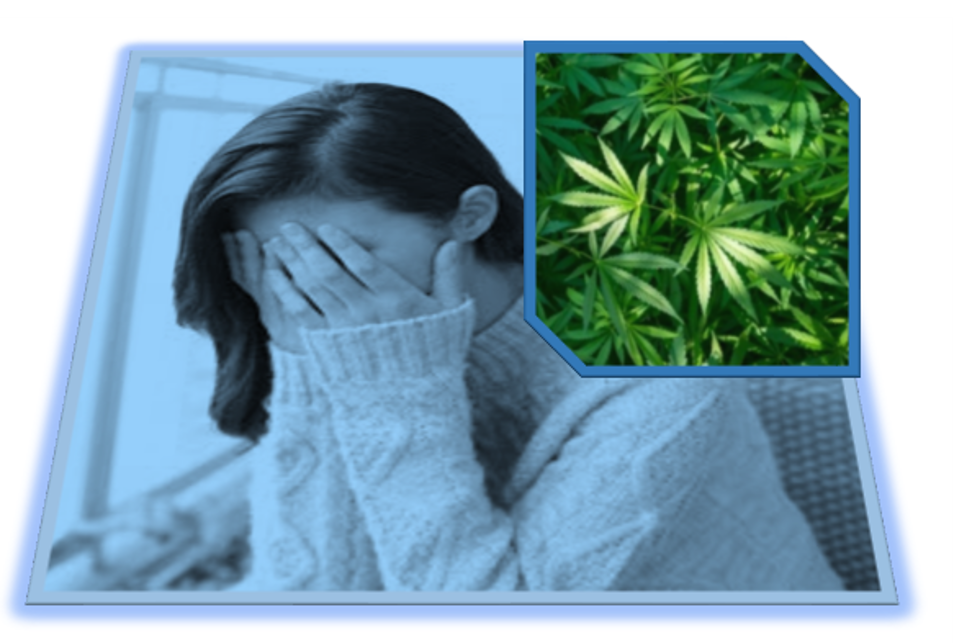
- While there is some support for the use of CBD for social anxiety, the use of cannabinoids for depression is far from supported by existing evidence.
- For people with depression, the potential harms may outweigh any benefits.
- People with anxiety run the risk of making their anxiety worse by taking anti-anxiety medications or supplements.
- Evidence of benefit of cannabinoids for depression is mixed. Those considering taking it for depression need to be aware of the risks. Use of cannabinoids containing a CBD-THC combination has been linked to an increased risk of suicide and lowered motivation. A National Institute on Drug Abuse (NIDA) survey of young adults ages 18-35 found that cannabis (marijuana) use was associated with increased risks of suicidal thoughts and suicide attempts.
- Test-tube studies on biomolecular-effects of pure CBD and terpenes on brain chemistry suggest intriguing areas for further research. These studies highlight recent discoveries about what drives depression and anxiety. Knowing the biology of anxiety and depression reveals a plethora of promising pathways with potential to heal anxiety and depression.
Always consult a qualified healthcare professional before stopping or starting any medications or supplements.
Anti-inflammatories in Cannabis: What It Says About Mental Health

Pure CBD and a class of compounds called terpenes found in cannabis have been shown to decrease inflammation. 1, 2, 3 That might enhance any benefits of cannabinoids for anxiety and depression—conditions exacerbated by inflammation. Research in animals is underway investigating how anti-inflammatory terpenes might work to decrease anxiety. 4
CBD might promote an antidepressant effect in animals by boosting a substance called brain-derived neurotrophic factor (BDNF)—a substance linked to better mental health that helps restore inflammatory damage and enhance neuroplasticity, a 2019 scientific review found. 5
But is lowering inflammation and restoring BDNF levels helpful for mental health?
The answer seems to be yes. And the good news is that lowering inflammation and boosting BDNF does not require a cannabinoid, supplement or medication. And it can be accomplished without the risk of side effects that can come with oral medications and supplements.
Read about how to reducing inflammation and boosting BDNF may help depression:
CANNABINOIDS & DEPRESSION

When stress shows up in life, it might feel like the easiest thing to do is popping a pill or taking an cannabinoid edible, tincture or spray. Because terpenes lower inflammation and CBD promotes increases in BDNF, someone struggling with anxiety or depression might be tempted to take CBD or a full-spectrum product with high terpenes. But the benefits of such strategies don’t really have any lasting impacts on the stress that drives vicious cycles amping up depressive symptoms. And tinctures and medications can actually make things worse.
For people with anxiety, which frequently accompanies depression, taking any supplement or medication that temporarily reduces anxiety can—in the long run—make anxiety worse and last longer.
Cannabinoid use for depression is far from supported by existing evidence. And use of cannabinoids containing a CBD-THC combination is linked to an increased risk of suicide. A National Institute on Drug Abuse (NIDA) survey of young adults ages 18-35 found that cannabis (marijuana) use was associated with increased risks of suicidal thoughts and suicide attempts. 6
“While we cannot establish that cannabis use caused the increased suicidality we observed in this study, these associations warrant further research,” said NIDA Director, Nora Volkow, M.D., senior author of this study.
More about the safety of taking cannabinoids can be found here.
People with depression and/or anxiety have other options besides experimenting with taking cannabinoids. There are ways to cut stress, reduce inflammation, promote BDNF and new nerve growth, and create new connections between nerve cells without taking a tablet or a tincture.
To find out how Mood Change Medicine helps people with depression, click link below:
To find out how Mood Change Medicine helps people with anxiety, click link below:
Links to more information on cannabinoids (CBD & THC):
Cannabinoids: Anxiety, Depression & Sleep
Are cannabinoids effective for sleep?
Are cannabinoids effective for anxiety?
How Safe are Inhaled Cannabinoids?
Side Effects, Drug & Supplement Interactions
CBD: Precautions & Drug Interactions
CBD: Is there a sweet spot for dosing?
Care informed by the understanding that emotional and physical wellbeing are deeply connected
________________________________________________________________________________________________________________
By using MoodChangeMedicine.com, you agree to accept this website’s terms of use, which can be viewed here
Citations
- Philpott HT, OʼBrien M, McDougall JJ. “Attenuation of early phase inflammation by cannabidiol prevents pain and nerve damage in rat osteoarthritis.” Pain. Dec. 2017. PubMed 28885454 ↩︎
- Oláh A, Tóth BI, Borbíró I, Sugawara K, Szöllõsi AG, et al. “Cannabidiol exerts sebostatic and antiinflammatory effects on human sebocytes.” J Clin Invest. Sep. 2014. PubMed 25061872 ↩︎
- Del Prado-Audelo ML, Cortés H, Caballero-Florán IH, González-Torres M. et al. “Therapeutic Applications of Terpenes on Inflammatory Diseases.” Front Pharmacol. 2021. Aug 13;12:704197. doi: 10.3389/fphar.2021.704197. PMID: 34483907; PMCID: PMC8414653. ↩︎
- Andréa L. Johnson, Ryan Verbitsky, James Hudson, Rachel Dean, Trevor J. Hamilton, “Cannabinoid type-2 receptors modulate terpene induced anxiety-reduction in zebrafish.” Biomedicine & Pharmacotherapy. 2023. Vol. 168, 2023, 115760, ISSN 0753-3322, doi: j.biopha.2023.115760. (sciencedirect) ↩︎
- Gabriela Pandini Silote, Ariandra Sartim, Amanda Sales, Amanda Eskelund, F.S. Guimarães, Gregers Wegener, Samia Joca. “Emerging evidence for the antidepressant effect of cannabidiol and the underlying molecular mechanisms.” Journal of Chemical Neuroanatomy. 2019.
Vol. 98, 2019, Pages 104-116, ISSN 0891-0618, doi.org/10.1016/j.jchemneu.2019.04.006. (sciencedirect) ↩︎ - Han B, Compton WM, Einstein EB, Volkow ND. “Associations of Suicidality Trends With Cannabis Use as a Function of Sex and Depression Status.” JAMA Network Open. 2021. DOI: 10.1001/jamanetworkopen.2021.13025. ↩︎

 Mood Change Medicine
Discussion
No comments yet.