By using MoodChangeMedicine.com, you agree to accept this website’s terms of use, which can be viewed here.
May 24, 2024
By Joie Meissner ND, BCB-L


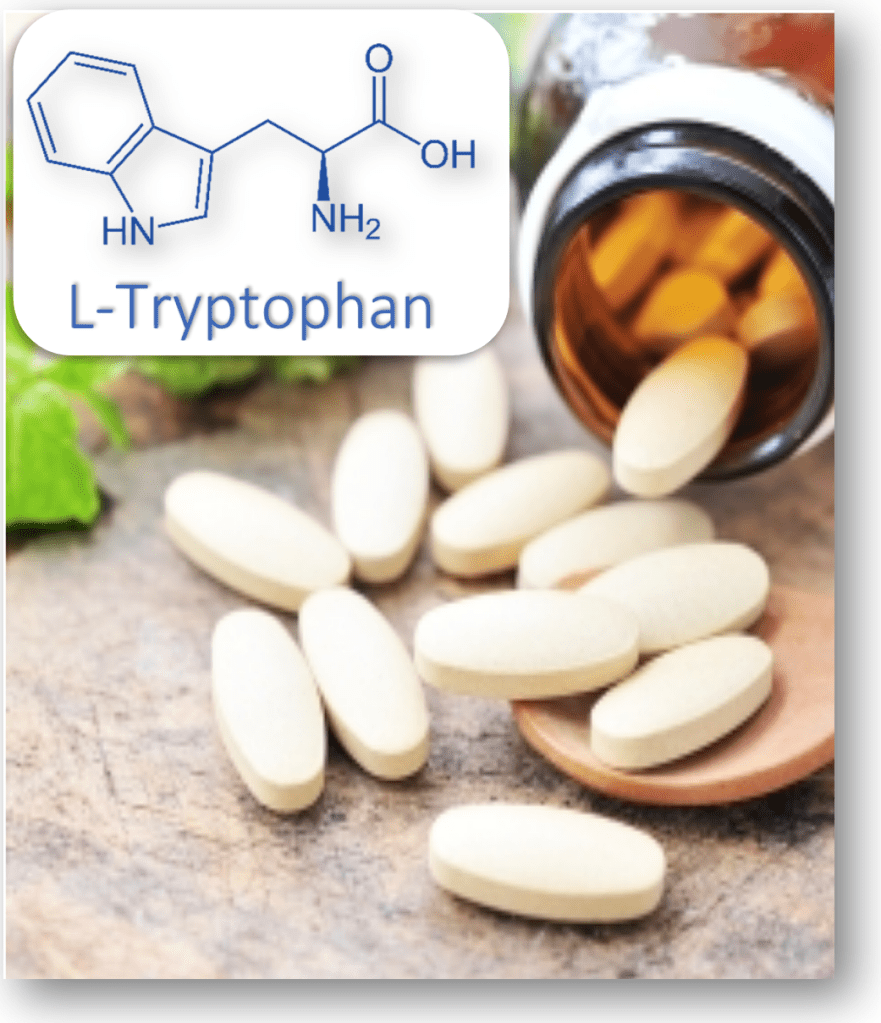
Tryptophan is an essential amino acid used by the body to make proteins, neurotransmitters, hormones and vitamin B3. It must be obtained from food. It’s found in abundance in foods like turkey, soybeans, egg whites, chicken, pumpkin seeds, spinach, and bananas.
That feeling of wanting to take a nap after a Thanksgiving turkey feasts suggest tryptophan might be a helpful sleep aid. Indeed, limited scientific literature supports modest efficacy for some people with insomnia.

Although it easy to get adequate tryptophan from food, it can also be bottled and taken as a supplement.
TRYPTOPHAN SNAP SHOT
- Diet including tryptophan in foods we eat impacts sleep quality.
- Tryptophan supplements might provide modest help for some people with insomnia. And taking it with supporting nutrients at the right time of day, especially in combination with properly timed bright blue light exposure, might boost its efficacy for sleep.
- There’s not enough evidence to know whether or not tryptophan supplements work for anxiety. But there are many alternatives that come with more evidence of efficacy for anxiety than tryptophan supplements.
- It does not appear that tryptophan supplements are effective for depression. But tryptophan in the body plays a very important role in depression.
- Tryptophan is important because the mood-hormone serotonin and the sleep-hormone melatonin are made from it.
- The way that tryptophan is broken down in the body impacts mental health. Changes in tryptophan metabolism can shift of the brain toward more neurotoxic states which are implicated in depression.
- Tryptophan plays a pivotal role in the gut-brain axis, a two-way biochemical conversation between our brains and bellies that helps determine the production of melatonin and serotonin, key brain chemicals that affect sleep and mood. Optimizing the biology of mood and sleep includes optimizing factors that impact tryptophan nutrition.
- Tryptophan’s safety profile is far superior to that of commonly prescribed sleep meds and anti-anxiety drugs like Xanax which are sometimes taken to help with sleep.
- Pharmaceuticals and supplements, including tryptophan, might provide temporary help, but don’t usually make a permanent change in depression, anxiety or insomnia.
- Talk therapies like cognitive behavioral therapy supported by integrative approaches including mindfulness-based biofeedback and stress reduction, hypnosis, diet and nutrient therapy for anxiety and depression can make a lasting difference.
- The efficacy of tryptophan supplements for insomnia does not come close to that of cognitive behavioral therapy for insomnia (CBT-I), which can provide a lasting cure.
Foods like beans, meat, certain grains and dairy products are high in protein. If we eat too much protein it can decrease the level of tryptophan in the brain by altering how tryptophan is passed through the blood–brain barrier. 1 If we eat too little protein, it can lead to a deficiency of tryptophan, which can lead to sleep disturbances. 2 How much fat as well as the type of fat 3 we eat can also affect sleep quality. 4
To find out more on the effectiveness of tryptophan supplements for insomnia, click link below:
To find out more on the effectiveness of tryptophan supplements for anxiety and depression, click link below:
Links to more information about tryptophan:
Are Tryptophan Supplements Effective for Insomnia?
Tryptophan for Sleep: Not as Simple as Popping a Pill
Are Tryptophan Supplements Effective for Anxiety & Depression?
Low Tryptophan = Low Serotonin. Does Low Serotonin = Depression?
Care informed by the understanding that emotional and physical wellbeing are deeply connected
________________________________________________________________________________________________________________
By using MoodChangeMedicine.com, you agree to accept this website’s terms of use, which can be viewed here.
Citations
- Sutanto C.N., Loh W.W., Toh D.W.K., Lee D.P.S., Kim J.E. “Association between dietary protein intake and sleep quality in middle-aged and older adults in Singapore.” Front. Nutr. 2022;9:832341. doi: 10.3389/fnut.2022.832341. [PMC free article] [PubMed] [CrossRef] [Google Scholar] ↩︎
- Sutanto C.N., Loh W.W., Toh D.W.K., Lee D.P.S., Kim J.E. “Association between dietary protein intake and sleep quality in middle-aged and older adults in Singapore.” Front. Nutr. 2022;9:832341. doi: 10.3389/fnut.2022.832341. [PMC free article] [PubMed] [CrossRef] [Google Scholar] ↩︎
- Lavialle M., Champeil-Potokar G., Alessandri J.M., Balasse L., Guesnet P., Papillon C., Pévet P., Vancassel S., Vivien-Roels B., Denis I. “An (n-3) polyunsaturated fatty acid–deficient diet disturbs daily locomotor activity, melatonin rhythm, and striatal dopamine in syrian hamsters.” J. Nutr. 2008;138:1719–1724. doi: 10.1093/jn/138.9.1719. [PubMed] [CrossRef] [Google Scholar] ↩︎
- Sejbuk M, Mirończuk-Chodakowska I, Witkowska AM. “Sleep Quality: A Narrative Review on Nutrition, Stimulants, and Physical Activity as Important Factors.” Nutrients. 2022 May 2;14(9):1912. doi: 10.3390/nu14091912. PMID: 35565879; PMCID: PMC9103473. ↩︎

 Mood Change Medicine
Discussion
No comments yet.