By using MoodChangeMedicine.com, you agree to accept this website’s terms of use, which can be viewed here.
May 25, 2024
By Joie Meissner ND, BCB-L
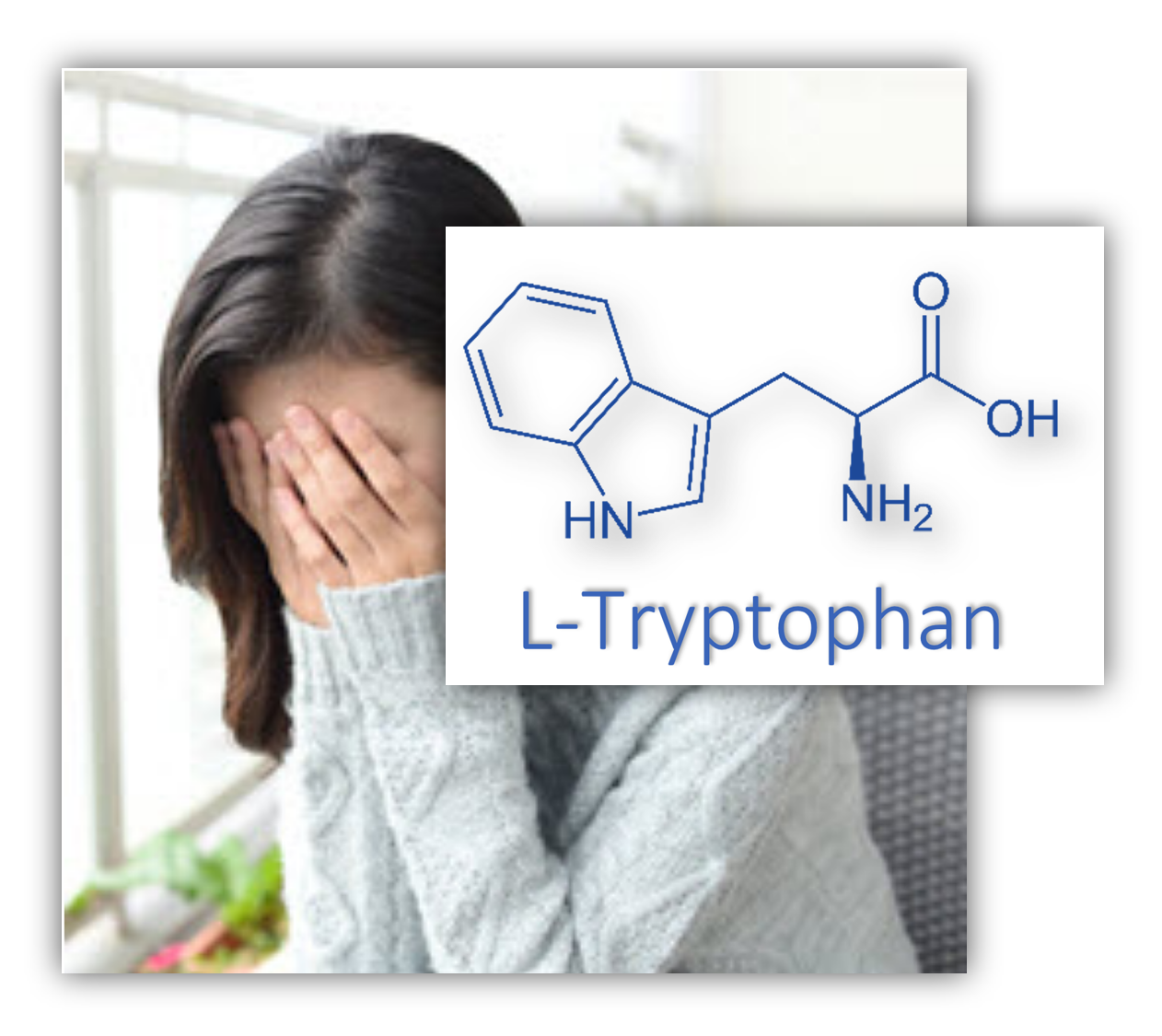
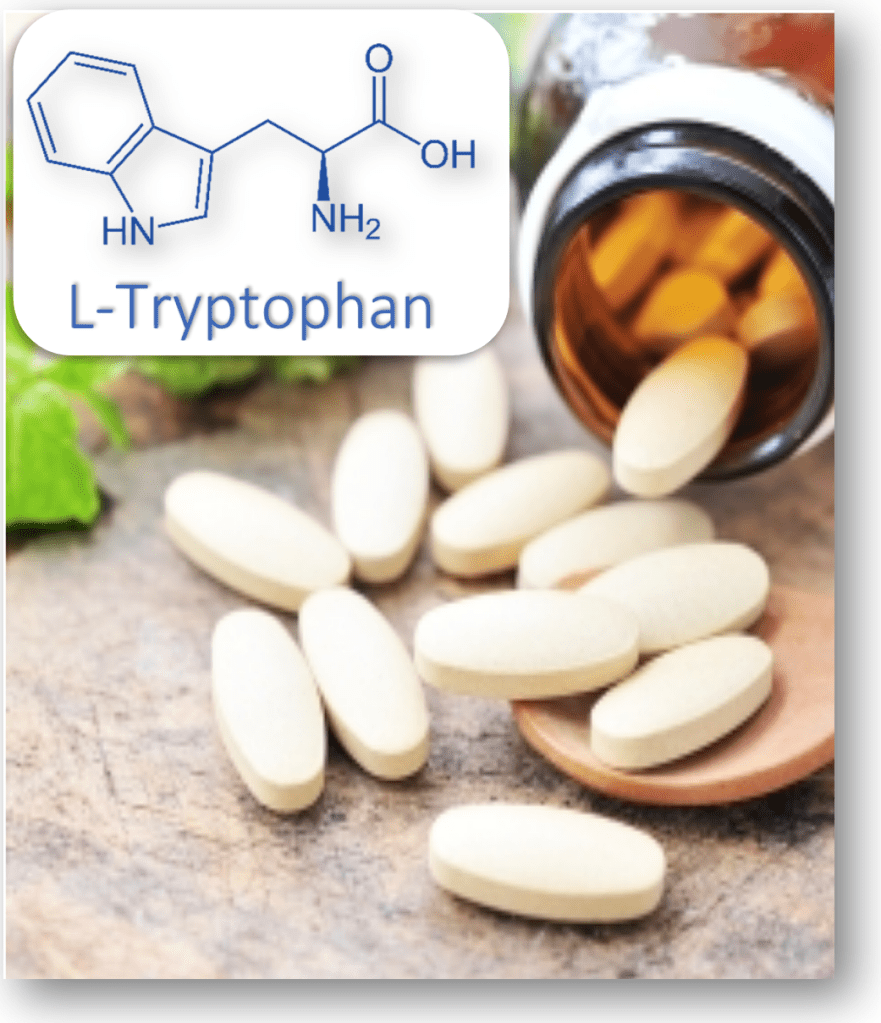
Though tryptophan plays a pivotal role in mood, current scientific evidence does not support the efficacy of tryptophan supplements for depression or anxiety. Nevertheless, it is important for mental health.
Tryptophan is an essential amino acid used by the body to make hormones, including serotonin which helps regulate mood. All the serotonin and melatonin in the body is made from the tryptophan we get from our diets.
“Taking L-tryptophan by mouth doesn’t seem to be beneficial in patients with depression. Also, it may increase the risk of side effects of some medications,” according to MedlinePlus National Library of Medicine data base. 1
Tryptophan received no endorsement as a nutritional treatment for unipolar depression based on a review of studies on natural medicines for major psychiatric disorders by a group of global experts. The expert guidelines came from the World Federation of Societies of Biological Psychiatry and the Canadian Network for Mood and Anxiety Disorders 2 who gave no recommendation for tryptophan for the treatment of unipolar depression. But the guidelines don’t specifically caution against its use for this purpose. 3 The guidelines note that studies have been few and those that exist are small and low-quality studies which have not supported tryptophan for the treatment of depression. 4
Tryptophan is much more commonly recommended for sleep than for depression or anxiety by integrative medicine physicians.
Tryptophan must be obtained from food. It’s found in abundance in foods like turkey, soybeans, egg whites, chicken, pumpkin seeds, spinach, and bananas.
Even if tryptophan supplements are not effective in the treatment of depression, tryptophan still plays an important role in mental health. Some studies have found that depressed persons have decreased blood levels of tryptophan. 5,6 SSRI antidepressants such as Prozac may alter how the body regulates the tryptophan-to-serotonin pathway. Putting patients on special diets with very low amounts of tryptophan can cause a relapse in depression patients who were treated with SSRIs. 8, 9 But not all deficiencies of tryptophan are the result of inadequate intake. A deficiency can be caused by other problems including absorption issues.
Given the lack of evidence supporting tryptophan in the form of supplements for anxiety and depression, what is effective for these conditions?
Tryptophan Alternatives for Anxiety
Talk therapy is considered the most effective treatment for anxiety. Cognitive behavior therapy (CBT) is a psychotherapeutic technique commonly used by counselors all over the world to help people with different types of anxiety such as social anxiety, health anxiety and generalized anxiety.
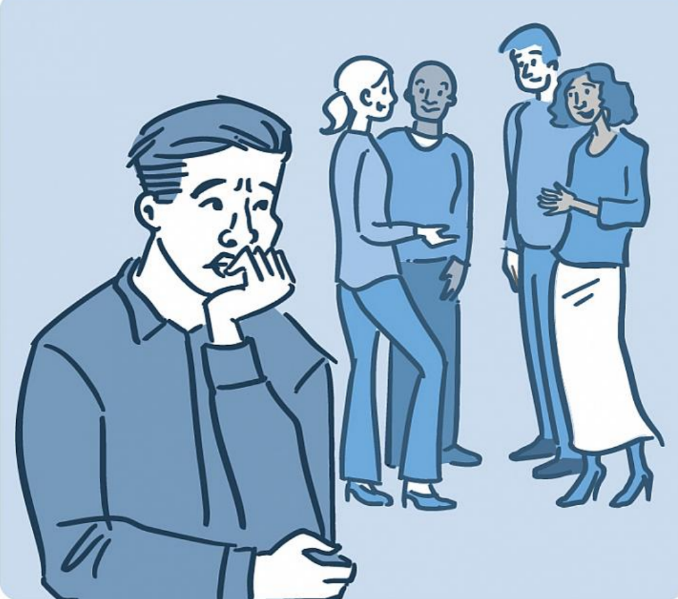
People with social anxiety have trouble performing when in social situations. In such situations, people with social anxiety are caught up in their fears of being judged by others, which can make it appear that they are not engaged in the conversation. People with health anxiety worry excessively about becoming or being dangerously ill. People with generalized anxiety worry about many things, not just social situations or health issues. These types of anxiety get labeled as disorders when then start to encroach on important life areas, such a career, family and relationships.
A 2023 analysis of 65 studies comprising 5048 participants found that CBT, third-wave CBTs, and relaxation therapy “outperformed treatment as usual for measures of effectiveness” for the treatment of general anxiety. CBT and third-wave CBTs were shown to be superior to treatment as usual. CBT was associated with short and long-term effectiveness. “CBT may represent the first-line therapy of GAD [generalized anxiety disorder]. Third-wave CBTs and relaxation therapy were associated with short-term effectiveness”, researchers concluded. 9
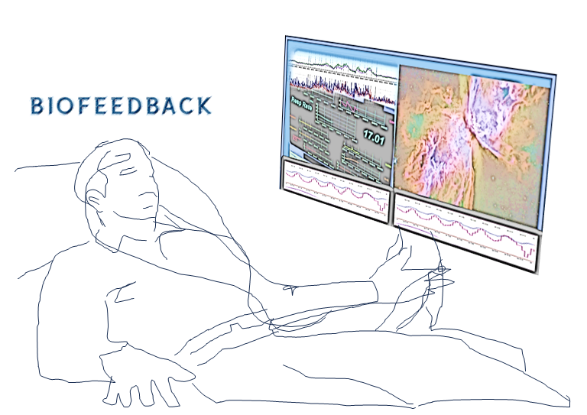
Biofeedback is a form of relaxation therapy often called Biofeedback-Assisted Relaxation Therapy. It is a commonly used to help with breath retraining in people with panic disorder.
People with panic disorder have panic attacks that cause so much distress that they live in fear of the next attack. Panic disorder is linked to alterations in breathing that make the nervous system more susceptible to stress hormones. The fear of having a panic attack can interfere with activities that involve leaving the house which can cause these people to develop a phobia, agoraphobia, in which people avoid going to places that could either trigger a panic attack or in which it would be hard to get help.
Biofeedback-assisted breath retraining has helped many people, including those who grapple with stress and anxiety disorders. Biofeedback is often used in conjunction with mindfulness techniques to treat a variety of anxiety conditions including generalized anxiety, health anxiety, social anxiety and phobias.
Mindfulness-based stress reduction (MBSR) reduces anxiety. MBSR “may be similarly effective to standard therapeutics, psychotherapy education, or cognitive behavioral therapy (CBT),” according to an expert, peer-reviewed report from NatMed Pro. 11 Mindfulness has been incorporated into cognitive behavioral therapies called third-wave CBT which includes proven psychotherapies such as Acceptance and Commitment Therapy (ACT) and Mindfulness-Based Cognitive Therapy (MBCT).
Mindfulness can be used in these therapies in a number of different ways.
For example, counselors use mindfulness to teach people with social anxiety to become aware of behaviors such as looking at their phone to avoid making eye-contact with others. This helps them perform better in social situations and thus reduces anxiety.
People with social anxiety learn mindfulness skills that help them focus on the conversations they are having in real-time rather than their internal worries, which also helps them to perform better in social situations.
Mindfulness and relaxation therapies as well as other counseling techniques are often combined with biofeedback to help people with a variety of anxiety problems.
Relaxation therapy teaches skills that are as best used regularly, including at times when the situation causing the anxiety is not present. Regular use of relaxation skills learned through biofeedback helps reset the nervous system so that it is less likely to go on “high alert” during anxiety-provoking situations. And biofeedback techniques can help us get through those anxiety-provoking situations so that our unconscious programming gets reset to a lower threat level. This de-programs the hair-trigger wiring that keeps that anxiety going. But therapist must be careful to not use any approach—including biofeedback, medications or supplements—that reduce anxiety as a way to avoid the feelings of anxiety. That only makes the anxiety worse in the long-run. Anxiety is overcome by confronting our fears and the situations that trigger them rather than by avoiding them.
Numerous studies show that relaxation therapy improves anxiety in patients with anxiety disorders and in patients experiencing anxiety due to stressful life events. 11, 12, 13, 14, 15
Some people obtain modest improvement in symptoms of generalized anxiety from other supplements such as ashwagandha. Again, it is best not to regularly use a supplement or medication to evade feeling anxious. This supplement is thought to help the body cope with stress when taken daily. It is not used to take right before a stressful event. Taken that way it may be ineffective.
General anxiety symptoms were modestly improved with ashwagandha supplementation, studies show. 16, 17, 18 CBD, a non-intoxicating constituent in the cannabis plant, shows promise for social anxiety. For more on CBD use for anxiety, click link.
Like all herbal and nutritional supplements, tryptophan, ashwagandha and CBD have potential safety risks. In April 2023, Denmark banned ashwagandha citing a 2020 finding by the Danish Technical University (DTU) that ashwagandha has a possibly harmful effect on thyroid and sex hormones and potential to induce abortions. Always consult a qualified healthcare professional before taking any supplements including tryptophan, CBD and ashwagandha.
Tryptophan Alternatives for Depression
Talk therapy is the most effective treatment for depression.
Evidence-based talk therapies like Cognitive Behavioral Therapy (CBT) works as well as medication, and unlike meds, CBT benefits persist even after active treatment ends. 19, 20, 21, 22, 23 Other talk therapies have also been shown to be as effective as antidepressant medications. Behavioral activation therapy (BA) had identical efficacy to a variety of antidepressant medications in depressed patients with heart failure, a 2024 randomized clinical study found. 24
Biofeeback and hypnotherapy have also be found to be effective for depression. These therapies complement other talk therapies like CBT.
Tryptophan has not be found to be effective for depression, but there are other supplements that have shown efficacy.
For example, St. John’s wort, 5-HTP, and Eicosapentaenoic Acid (EPA) from fish oil are more effective for depression than tryptophan, based on current evidence.
5-HTP might be as effective for depression as pharmaceutical antidepressants. “The therapeutic efficacy of l-5-HTP was considered as equal to that of fluoxetine [Prozac],” a randomized, double-blind study found. 25
St. John’s wort may be more effective than 5-HTP for depression but it has more potentially dangerous drug interactions. A prestigious Cochrane review of 17 randomized, controlled trials—including a total of 5489 patients—concluded that St. John’s wort is “similarly effective as standard antidepressants” and has “fewer side effects.”26
Fish oil supplements containing at least 60% EPA moderately reduces depressive symptoms in patients with major depression, clinical studies show. 27, 28, 29
Always consult a physician or qualified healthcare professional before stopping or starting any medications or supplements.
To find out about low tryptophan as a potential depression trigger, click link below:
To find out about the safety of taking tryptophan supplements, click link below:
Links to more information about tryptophan:
Tryptophan & Its Alternatives for Depression, Anxiety & Sleep
Are Tryptophan Supplements Effective Insomnia?
Tryptophan for Sleep: Not as Simple as Popping a Pill
Low Tryptophan = Low Serotonin. Does Low Serotonin = Depression?
Care informed by the understanding that emotional and physical wellbeing are deeply connected
________________________________________________________________________________________________________________
By using MoodChangeMedicine.com, you agree to accept this website’s terms of use, which can be viewed here.
Citations
- MedlinePlus National Library of Medicine medlineplus.gov/druginfo/natural/326.html#Effectiveness Last reviewed – 05/12/2023 accessed Feb 2024, accessed March 2024 ↩︎
- Sarris J, Ravindran A, Yatham LN, et al. “Clinician guidelines for the treatment of psychiatric disorders with nutraceuticals and phytoceuticals: The World Federation of Societies of Biological Psychiatry (WFSBP) and Canadian Network for Mood and Anxiety Treatments (CANMAT) Taskforce.” World J Biol Psychiatry. 2022;23:424-455. View abstract. ↩︎
- Sarris J, Ravindran A, Yatham LN, et al. “Clinician guidelines for the treatment of psychiatric disorders with nutraceuticals and phytoceuticals: The World Federation of Societies of Biological Psychiatry (WFSBP) and Canadian Network for Mood and Anxiety Treatments (CANMAT) Taskforce.” World J Biol Psychiatry. 2022;23:424-455. View abstract. ↩︎
- Sarris J, Ravindran A, Yatham LN, et al. “Clinician guidelines for the treatment of psychiatric disorders with nutraceuticals and phytoceuticals: The World Federation of Societies of Biological Psychiatry (WFSBP) and Canadian Network for Mood and Anxiety Treatments (CANMAT) Taskforce.” World J Biol Psychiatry. 2022;23:424-455. View abstract. ↩︎
- Coppen A, Eccleston EG, Peet M.Total and Free tryptophan concentration in the plasma of depressive patients. Lancet. 1973 Jul 14;2(7820):60-3. doi: 10.1016/s0140-6736(73)93259-5. PMID: 4123618. ↩︎
- Cowen PJ, Parry-Billings M, Newsholme EA. Decreased plasma tryptophan levels in major depression Decreased plasma tryptophan levels in major depression. J Affect Disord. 1989 Jan-Feb;16(1):27-31. doi: 10.1016/0165-0327(89)90051-7. PMID: 2521647. ↩︎
- Bell C, Abrams J, Nutt D. “Tryptophan depletion and its implications for psychiatry.” Br J Psychiatry. 2001;178:399-405.. View abstract. ↩︎
- Murphy FC, Smith KA, Cowen PJ, et al. “The effects of tryptophan depletion on cognitive and affective processing in healthy volunteers.” Psychopharmacology (Berl) 2002;163:42-53.. View abstract ↩︎
- Papola D, Miguel C, Mazzaglia M, et al. “Psychotherapies for Generalized Anxiety Disorder in Adults: A Systematic Review and Network Meta-Analysis of Randomized Clinical Trials.” JAMA Psychiatry. 2024;81(3):250–259. doi:10.1001/jamapsychiatry.2023.3971 ↩︎
- “Tryptophan Monograph” NatMed-Pro Therapeutic Research Center database last modified on 5/12/2023, accessed March 2024 ↩︎
- Gagne D, Toye RC. “The effects of therapeutic touch and relaxation therapy in reducing anxiety.” Arch Psychiatr Nurs. 1994;8(3):184-9. View abstract. ↩︎
- Manzoni GM, Pagnini F, Castelnuovo G, Molinari E. “Relaxation training for anxiety: a ten-years systematic review with meta-analysis.” BMC Psychiatry. 2008;8:41. View abstract. ↩︎
- Kim HS, Kim EJ. “Effects of Relaxation Therapy on Anxiety Disorders: A Systematic Review and Meta-analysis.” Arch Psychiatr Nurs. 2018;32(2):278-284. View abstract. ↩︎
- Ibrahim A, Koyuncu G, Koyuncu N, Suzer NE, Cakir OD, Karcioglu O. “The effect of Benson relaxation method on anxiety in the emergency care.” Medicine (Baltimore). 2019;98(21):e15452. View abstract. ↩︎
- Zenouzi A, Moghadam ZB, Babayanzad S, Asghari M, Rezaei E. “The effect of Benson relaxation technique on stress, anxiety, and depression in pregnant women.” Holist Nurs Pract. 2021. View abstract. ↩︎
- Sarris J, Ravindran A, Yatham LN, et al. “Clinician guidelines for the treatment of psychiatric disorders with nutraceuticals and phytoceuticals: The World Federation of Societies of Biological Psychiatry (WFSBP) and Canadian Network for Mood and Anxiety Treatments (CANMAT) Taskforce.” World J Biol Psychiatry. 2022;23:424-455. View abstract. ↩︎
- Fuladi S, Emami SA, Mohammadpour AH, Karimani A, Manteghi AA, Sahebkar A. “Assessment of Withania somnifera root extract efficacy in patients with generalized anxiety disorder: A randomized double-blind placebo-controlled trial.” Curr Clin Pharmacol. 2020. View abstract. ↩︎
- Sud Khyati S, Thaker B. “A randomized double blind placebo controlled study of ashwagandha on generalized anxiety disorder.” Int Ayurvedic Med J. 2013;1(5):1-7. ↩︎
- uptodate.com/contents/depression-treatment-options-for-adults-beyond-the-basics/print
UpToDate. Accessed March 2024 ↩︎ - DeRubeis RJ, Hollon SD, Amsterdam JD, et al. “Cognitive Therapy vs Medications in the Treatment of Moderate to Severe Depression.” Arch Gen Psychiatry. 2005;62(4):409–416. doi:10.1001/archpsyc.62.4.409 ↩︎
- DeRubeis RJ, Siegle GJ, Hollon SD. “Cognitive therapy versus medication for depression: treatment outcomes and neural mechanisms.” Nat Rev Neurosci. 2008 Oct;9(10):788-96. doi: 10.1038/nrn2345. Epub 2008 Sep 11. PMID: 18784657; PMCID: PMC2748674. ↩︎
- Dams, Travis J. MD; Dhesi, Tajinder S. MD. “Is individual cognitive behavioral therapy as effective as antidepressants in patients with major depressive disorder?.” Evidence-Based Practice. 24(5):p 21-22, May 2021. | DOI: 10.1097/EBP.0000000000001075 journals.lww ↩︎
- Noetel M, Sanders T, Gallardo-Gómez D, Taylor P, del Pozo Cruz B, van den Hoek D et al. “Effect of exercise for depression: systematic review and network meta-analysis of randomised controlled trials.” BMJ 2024; 384 :e075847 doi:10.1136/bmj-2023-075847 ↩︎
- IsHak WW, Hamilton MA, Korouri S, et al. “Comparative Effectiveness of Psychotherapy vs Antidepressants for Depression in Heart Failure: A Randomized Clinical Trial.” JAMA Netw Open. 2024;7(1):e2352094. doi:10.1001/jamanetworkopen.2023.52094 ↩︎
- Jangid P, Malik P, Singh P, Sharma M, Gulia AK “Comparative study of efficacy of l-5-hydroxytryptophan and fluoxetine in patients presenting with first depressive episode.” Asian J Psychiatr. 2013 Feb;6(1):29-34. doi: 10.1016/j.ajp.2012.05.011. Epub 2012 Jul 12. PMID: 23380314 ↩︎
- Linde K, Berner MM, Kriston L: “St John’s wort for major depression.” Cochrane Database Syst Rev 2008;4: CD000448. ↩︎
- Grosso G, Pajak A, Marventano S, Castellano S, Galvano F, Bucolo C, Drago F, Caraci F. “Role of omega-3 fatty acids in the treatment of depressive disorders: a comprehensive meta-analysis of randomized clinical trials.” PLoS One. 2014 May 7;9(5):e96905. View abstract. ↩︎
- Sublette, M. E., Ellis, S. P., Geant, A. L., and Mann, J. J. “Meta-analysis of the effects of eicosapentaenoic acid (EPA) in clinical trials in depression.” J.Clin.Psychiatry. 2011;72(12):1577-1584. View abstract. ↩︎
- Liao Y, Xie B, Zhang H, et al. “Efficacy of omega-3 PUFAs in depression: A meta-analysis.” Transl Psychiatry. 2019 Aug 5;9(1):190. View abstract. ↩︎

 Mood Change Medicine
Discussion
No comments yet.