By using MoodChangeMedicine.com, you agree to accept this website’s terms of use, which can be viewed here.

May 24, 2024
By Joie Meissner ND, BCB-L
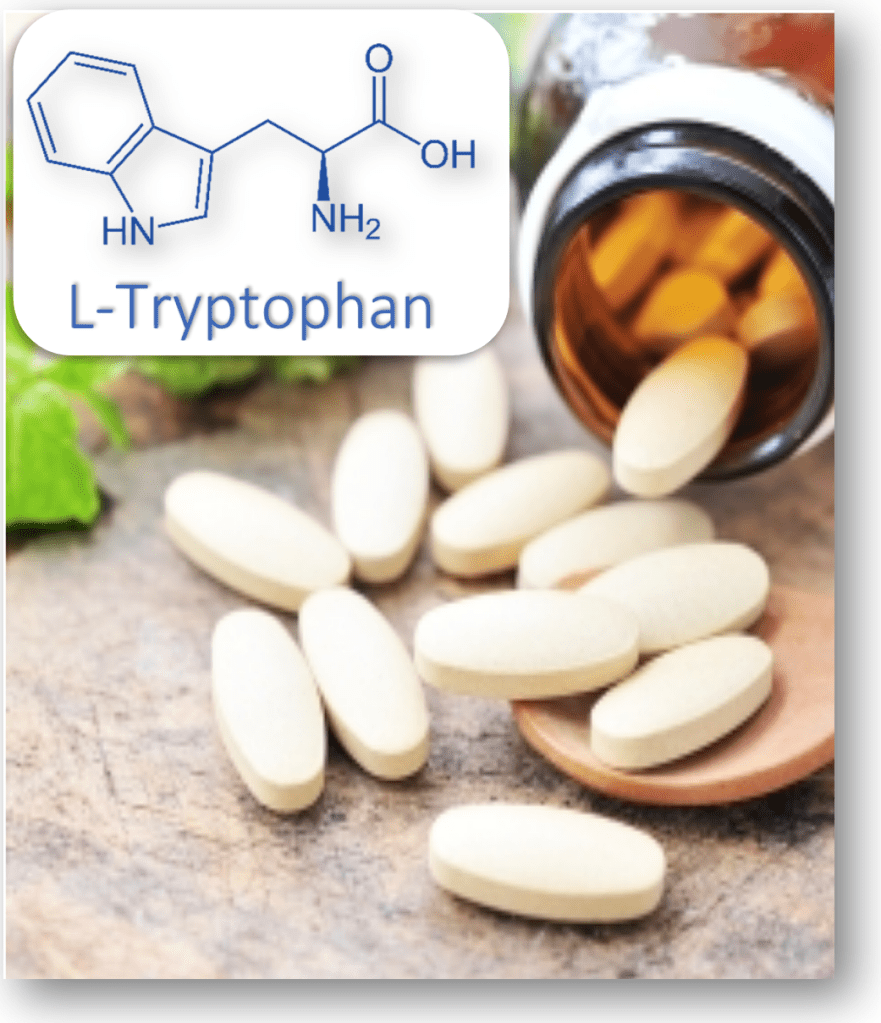
Tryptophan is an essential amino acid used by the body to make proteins, neurotransmitters, hormones and vitamin B3. It must be obtained from food. It’s found in abundance in foods like turkey, soybeans, egg whites, chicken, pumpkin seeds, spinach, and bananas.
The hormones serotonin and melatonin both play a role in regulating sleep. All the serotonin and melatonin in the body is made from the tryptophan we get from our diets.
If we eat too little protein, it can lead to a deficiency of tryptophan, which can lead to sleep disturbances. 1
Eating foods that are rich in tryptophan, particularly from plants, is linked to increased total sleep time. 2, 3 But one cannot simply take a tryptophan supplement and think it will result in better sleep.
The tryptophan dose in the supplements is important for how well it works. But so is the rest of our diet. For example, if we eat too much protein it can decrease the level of tryptophan in the brain by altering how much tryptophan is passed through the blood–brain barrier. 1 Foods like beans, meat, certain grains and dairy products are high in protein.
That too much protein can interfere with tryptophan passage into the brain is supported by an experiment that found that consumption of a tryptophan-free protein drink has a negative impact on sleep continuity. 5
Given that dietary tryptophan play such a pivotal role in sleep, it might make sense that taking tryptophan supplements should improve sleep. But as we’ve seen, it’s just not as simple as popping a pill.

How much fat as well as the type of fat we eat can also affect sleep quality. Fatty fish, a good source of omega-3 and omega-6 fatty acids, may improve sleep. 6, 7 It may be related to the impact that omega-3 fatty acids have on the synthesis of the sleep hormone melatonin. 8 High consumption of saturated fatty acid can cause deceases in slow-wave (restorative) sleep and increase the number of nighttime awakenings. 9
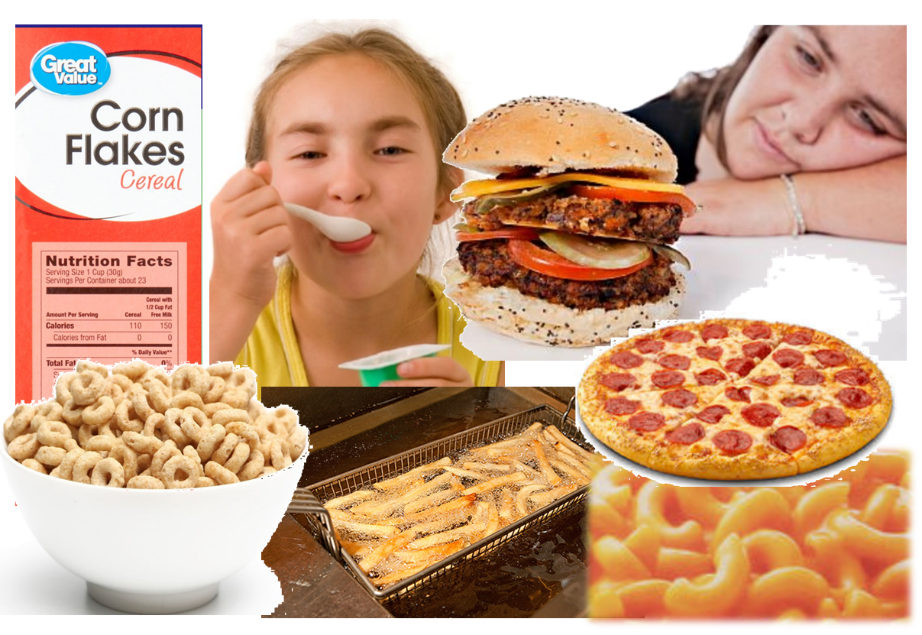
When we eat high amounts of simple sugars and carbohydrates combined with very low amounts of other macronutrients like protein at 5% or less,10 it can raise blood sugar. This can change the amount of tryptophan that can pass through the blood-brain barrier and increase levels of tryptophan in the brain. This added tryptophan in the brain may be part of the reason why we feel a bit sleepy and somewhat comforted after eating a lot of starchy foods that contain little fat, fiber or protein such as white breads, plain white rolls, plain pasta noodles, white rice or pretzels. 11
There are other factors that impact tryptophan’s absorption and affect the levels of tryptophan reaching the brain where it is used to make the sleep-hormone melatonin. Adequate levels of other nutrients are also needed to manufacture hormones like serotonin and melatonin.
These complications in how tryptophan is processed by the body may be the reason that some experts assert there’s not enough “reliable” evidence to determine tryptophan’s efficacy in the treatment of sleep problems. 12
But there are differing opinions on tryptophan’s efficacy for insomnia. According to an expert, peer-reviewed report from NatMed Pro, there is limited evidence from small studies suggesting that “tryptophan may modestly improve symptoms, particularly sleep latency, in patients with insomnia.” 13 Sleep latency refers to how long it takes to fall asleep when your head hits the pillow.
Two professional organizations composed of 31 leading academics and clinicians from 15 countries report that both tryptophan and 5-HTP “may benefit symptomatic improvement of insomnia” patients with depression. This professional body has concluded, based on high-quality evidence, that tryptophan has “Acceptable safety data.” 14
Tryptophan has a superior safety profile compared to sleeping pills like Ambien and Lunesta—called z-drugs—as well as anti-anxiety drugs like Ativan and Xanax—called benzodiazepenes—that are often used to help anxious people sleep. These drugs are extremely sedating, can be addictive if used regularly, and are associated with number of serious health risks including potentially life-threatening withdrawal symptoms if abruptly discontinued. Always consult a qualified healthcare professional such as a physician before starting or stopping any medications.
The antihistamine diphenhydramine is a very common ingredient in over-the-counter (OTC) sleep aids like Nytol and Sominex, as well as in OTC allergy medications like Benadryl and in OTC pain medications like Advil PM (as of February 2024). Diphenhydramine use has been linked to dementia and Alzheimer’s Disease. 15 And the FDA warns of very serious side effects and possibly death if diphenhydramine is taken beyond recommended doses.
Tryptophan is safer than sleeping pills but the question remains how well do tryptophan supplements work compared to other insomnia treatments?
There are a number of small-scale clinical studies showing that tryptophan helps people fall asleep a little bit faster and some that also show decreased time spent awake after sleep onset.16, 17, 18, 19, 20, 21, 22, 23
A 2022 scientific review of tryptophan supplementation on sleep quality that pooled data from four studies found it shortened time awake in the middle of the night after falling asleep. The researchers concluded that supplementation, especially at ≥1 g, can help improve sleep quality, although safety has only been shown at doses up to 5 grams for 21 days. 24
Other studies have shown that tryptophan in doses of 1 g increases sleepiness and decreases the time it takes to fall asleep. It’s most effective for mild insomnia. Some studies of severe insomniacs and in patients with serious medical or psychiatric illness have not found a benefit. One researcher asserts that it is not shown to improve sleep in people without insomnia. 25
Though tryptophan is very likely safer than pharmaceutical sleep aids, the benefits of taking tryptophan to improve sleep pale in comparison to the benefits of cognitive behavioral therapy for insomnia (CBT-I).
CBT-I is the most effective approach to getting a good night’s sleep and it doesn’t involve taking a supplement or drug. It’s endorsed by the American Academy of Sleep Medicine. Data show between 70 and 80 percent of patients have better sleep after doing CBT-I, according to a 2022 review by sleep medicine experts. 26
Cognitive Behavioral Therapy for Insomnia (CBT-I) has been considered the most appropriate treatment for patients with primary insomnia since 1999. 27, 28, 29 “Almost all patients should receive” CBT-I, the American Academy of Sleep Medicine declared in its clinical practice guideline for chronic insomnia published in 2021. 30 And numerous studies demonstrate its effectiveness. 31, 32
A 2023 systematic review and meta-analysis of seven randomized controlled studies involving 3,597 participants showed that CBT-I was an effective treatment for both insomnia and depression. 33
Research has shown CBT-I to be superior to sleeping pills for treating chronic insomnia. 34, 35, 36, 37 And it doesn’t have all the potentially serious side effects of the sleep meds. But more to the point, CBT-I can cure insomnia. Drugs cannot. That’s why sleep and drug experts alike, give hands down recommendations for CBT-I over drugs.
Biofeedback is used in CBT-I and is part of sleep treatment programs at prestigious health care systems like Mayo Clinic in their program “Insomnia treatment: Cognitive behavioral therapy instead of sleeping pills”. The Cleveland Clinic also uses biofeedback in their CBT-I program for the sleep anxiety that often accompanies insomnia. Biofeedback is used by Duke University Health System and the University of Tennessee Integrative Sleep Medicine Program.
Mood Change Medicine’s Dr. Meissner is Board Certified in Biofeedback (BCB) by Biofeedback Certification International Alliance.
To find out more about how tryptophan’s efficacy for sleep is affected by foods, nutrient deficiencies, problems with absorption, timing and dosage, click link below:
To find out more about the safety of taking tryptophan supplements, click link below:
Links to more information about tryptophan:
Tryptophan & Its Alternatives for Depression, Anxiety & Sleep
Tryptophan for Sleep: Not as Simple as Popping a Pill
Are Tryptophan Supplements Effective for Anxiety & Depression?
Low Tryptophan = Low Serotonin. Does Low Serotonin = Depression?
Care informed by the understanding that emotional and physical wellbeing are deeply connected
________________________________________________________________________________________________________________
By using MoodChangeMedicine.com, you agree to accept this website’s terms of use, which can be viewed here.
Citations
- Sutanto C.N., Loh W.W., Toh D.W.K., Lee D.P.S., Kim J.E. “Association between dietary protein intake and sleep quality in middle-aged and older adults in Singapore.” Front. Nutr. 2022;9:832341. doi: 10.3389/fnut.2022.832341. [PMC free article] [PubMed] [CrossRef] [Google Scholar] ↩︎
- Sejbuk M, Mirończuk-Chodakowska I, Witkowska AM. “Sleep Quality: A Narrative Review on Nutrition, Stimulants, and Physical Activity as Important Factors.” Nutrients. 2022 May 2;14(9):1912. doi: 10.3390/nu14091912. PMID: 35565879; PMCID: PMC9103473. ↩︎
- Martínez-Rodríguez A., Rubio-Arias J., Ramos-Campo D.J., Reche-García C., Leyva-Vela B., Nadal-Nicolás Y. “Psychological and sleep effects of tryptophan and magnesium-enriched mediterranean diet in women with fibromyalgia.” Int. J. Environ. Res. Public Health. 2020;17:2227. doi: 10.3390/ijerph17072227. [PMC free article] [PubMed] [CrossRef] [Google Scholar] ↩︎
- Sutanto C.N., Loh W.W., Toh D.W.K., Lee D.P.S., Kim J.E. “Association between dietary protein intake and sleep quality in middle-aged and older adults in Singapore.” Front. Nutr. 2022;9:832341. doi: 10.3389/fnut.2022.832341. [PMC free article] [PubMed] [CrossRef] [Google Scholar] ↩︎
- Riemann D, Feige B, Hornyak M, Koch S, Hohagen F, Voderholzer U. “The tryptophan depletion test: impact on sleep in primary insomnia – a pilot study.” Psychiatry Res. 2002 Mar 15;109(2):129-35. doi: 10.1016/s0165-1781(02)00010-0. PMID: 11927137. ↩︎
- Lavialle M., Champeil-Potokar G., Alessandri J.M., Balasse L., Guesnet P., Papillon C., Pévet P., Vancassel S., Vivien-Roels B., Denis I. “An (n-3) polyunsaturated fatty acid–deficient diet disturbs daily locomotor activity, melatonin rhythm, and striatal dopamine in syrian hamsters.” J. Nutr. 2008;138:1719–1724. doi: 10.1093/jn/138.9.1719. [PubMed] [CrossRef] [Google Scholar] ↩︎
- Sejbuk M, Mirończuk-Chodakowska I, Witkowska AM. “Sleep Quality: A Narrative Review on Nutrition, Stimulants, and Physical Activity as Important Factors.” Nutrients. 2022 May 2;14(9):1912. doi: 10.3390/nu14091912. PMID: 35565879; PMCID: PMC9103473. ↩︎
- St-Onge M.-P., Roberts A., Shechter A., Choudhury A.R. “Fiber and saturated fat are associated with sleep arousals and slow wave sleep.” J. Clin. Sleep Med. 2016;12:19–24. doi: 10.5664/jcsm.5384. [PMC free article] [PubMed] [CrossRef] [Google Scholar] ↩︎
- St-Onge M.-P., Roberts A., Shechter A., Choudhury A.R. “Fiber and saturated fat are associated with sleep arousals and slow wave sleep.” J. Clin. Sleep Med. 2016;12:19–24. doi: 10.5664/jcsm.5384. [PMC free article] [PubMed] [CrossRef] [Google Scholar] ↩︎
- Gangwisch J., Hale L., St-Onge M.-P., Choi L., LeBlanc E.S., Malaspina D., Opler M.G., Shadyab A.H., Shikany J.M., Snetselaar L., et al. “High glycemic index and glycemic load diets as risk factors for insomnia: Analyses from the women’s health initiative.” Am. J. Clin. Nutr. 2020;111:429–439. doi: 10.1093/ajcn/nqz275. [PMC free article] [PubMed] [CrossRef] [Google Scholar] ↩︎
- Sejbuk M, Mirończuk-Chodakowska I, Witkowska AM. Sleep Quality: A Narrative Review on Nutrition, Stimulants, and Physical Activity as Important Factors. Nutrients. 2022 May 2;14(9):1912. doi: 10.3390/nu14091912. PMID: 35565879; PMCID: PMC9103473 ↩︎
- Medlineplus.gov/druginfo/natural/326.html#Effectiveness MedlinePlus National Library of Medicine Last reviewed – 05/12/2023, accessed March 2024 ↩︎
- “Tryptophan Monograph” NatMed-Pro Therapeutic Research Center database last modified on 5/12/2023, accessed March 2024 ↩︎
- Sarris J, Ravindran A, Yatham LN, et al. “Clinician guidelines for the treatment of psychiatric disorders with nutraceuticals and phytoceuticals: The World Federation of Societies of Biological Psychiatry (WFSBP) and Canadian Network for Mood and Anxiety Treatments (CANMAT) Taskforce.” World J Biol Psychiatry. 2022;23:424-455. View abstract. ↩︎
- Gray SL, Anderson ML, Dublin S, et al. “Cumulative Use of Strong Anticholinergics and Incident Dementia: A Prospective Cohort Study.” JAMA Intern Med. 2015;175(3):401–407. doi:10.1001/jamainternmed.2014.7663 JAMA 2091745 ↩︎
- Hartmann E, Spinweber CL. “Sleep induced by L-tryptophan. Effect of dosages within the normal dietary intake.” J Nerv Ment Dis. 1979;167:497-9. View abstract. ↩︎
- Hartmann E. “Effects of L-tryptophan on sleepiness and on sleep.” J Psychiatr Res. 1982-1983;17(2):107-13. doi: 10.1016/0022-3956(82)90012-7. PMID: 6764927. ↩︎
- Korner E, Bertha G, Flooh E, et al. “Sleep-inducing effect of L-tryptophane.” Eur Neurol. 1986;25 Suppl 2:75-81. View abstract. ↩︎
- Sutanto, C. N., Loh, W. W., and Kim, J. E. (2022). “The impact of tryptophan supplementation on sleep quality: a systematic review, meta-analysis, and meta-regression.” Nutr. Rev. 80, 306–316. doi: 10.1093/nutrit/nuab027PubMed Abstract | CrossRef Full Text | Google Scholar ↩︎
- Wang D, Li W, Xiao Y, He W, Wei W, Yang L, Yu J, Song F, Wang Z. “Tryptophan for the sleeping disorder and mental symptom of new-type drug dependence: A randomized, double-blind, placebo-controlled trial.” Medicine (Baltimore). 2016 Jul;95(28):e4135. doi: 10.1097/MD.0000000000004135. PMID: 27428201; PMCID: PMC4956795. ↩︎
- Schneider-Helmert D, Spinweber CL. “Evaluation of L-tryptophan for treatment of insomnia: a review.”Psychopharmacology (Berl) 1986;89:1-7. ↩︎
- Ghadirian AM, Murphy BE, Gendron MJ. “Efficacy of light versus tryptophan therapy in seasonal affective disorder.” J Affect Disord. 1998;50:23-27 ↩︎
- McGrath RE, Buckwald B, Resnick EV. “The effect of L-tryptophan on seasonal affective disorder.” J
Clin Psychiatry. 1990;51:162-163. ↩︎ - Sutanto, C. N., Loh, W. W., and Kim, J. E. (2022). “The impact of tryptophan supplementation on sleep quality: a systematic review, meta-analysis, and meta-regression.” Nutr. Rev. 2022. 80, 306–316. doi: 10.1093/nutrit/nuab027 PubMed Abstract | CrossRef Full Text | Google Scholar ↩︎
- Hartmann E. “Effects of L-tryptophan on sleepiness and on sleep.” J Psychiatr Res. 1982-1983;17(2):107-13. doi: 10.1016/0022-3956(82)90012-7. PMID: 6764927. ↩︎
- Muench A, Vargas I, Grandner MA, Ellis JG, Posner D, Bastien CH, Drummond SP, Perlis ML. “We know CBT-I works, now what?” Fac Rev. 2022 Feb 1;11:4. doi: 10.12703/r/11-4. PMID: 35156100; PMCID: PMC8808745 ↩︎
- Chesson AL Jr, Anderson WM, Littner M, Davila D, Hartse K, Johnson S, et al. “Practice parameters for the nonpharmacologic treatment of chronic insomnia”. An American Academy of Sleep Medicine report. Standards of Practice Committee of the American Academy of Sleep Medicine.” Sleep. 1999 Dec 15. 22(8):1128-33. ↩︎
- Edinger JD, Means MK. “Cognitive-behavioral therapy for primary insomnia.” Clin Psychol Rev. 2005 Jul. 25(5):539-58. ↩︎
- Morgenthaler T, Kramer M, Alessi C, Friedman L, Boehlecke B, Brown T, et al. “Practice parameters for the psychological and behavioral treatment of insomnia: an update. An american academy of sleep medicine report.” [sic] Sleep. 2006 Nov 1. 29(11):1415-9. ↩︎
- Edinger, Jack D. et al. “Behavioral and psychological treatments for chronic insomnia disorder in adults: an American Academy of Sleep Medicine clinical practice guideline.” J Clin Sleep Med. 2021 Feb 1; 17(2): 255–262. Published online 2021 Feb 1. doi: 10.5664/jcsm.8986 doi: 10.5664/jcsm.8986 PMCID: PMC7853203 PMID: 33164742 ↩︎
- Lin, Wenyao. Li, Na. Yang, Lili. Zhang, Yuqing. “The efficacy of digital cognitive behavioral therapy for insomnia and depression: a systematic review and meta-analysis of randomized controlled trials” PeerJ. 2023; 11: e16137. Published online 2023 Oct 31. doi: 10.7717/peerj.16137
PMID: 37927792 PMCID: PMC10624170 ↩︎ - van der Zweerde, Tanja, et al. “Cognitive behavioral therapy for insomnia: A meta-analysis of long-term effects in controlled studies.” Sleep Medicine Reviews. 2019. Volume 48, 2019,
doi.org/10.1016/j.smrv.2019.08.002. ↩︎ - Lin, Wenyao. Li, Na. Yang, Lili. Zhang, Yuqing. “The efficacy of digital cognitive behavioral therapy for insomnia and depression: a systematic review and meta-analysis of randomized controlled trials” PeerJ. 2023; 11: e16137. Published online 2023 Oct 31. doi: 10.7717/peerj.16137
PMID: 37927792 PMCID: PMC10624170 ↩︎ - Morin CM, Hauri PJ, Espie CA, Spielman AJ, Buysse DJ, Bootzin RR. “Nonpharmacologic treatment of chronic insomnia. An American Academy of Sleep Medicine review.” Sleep. 1999 Dec 15. 22(8):1134-56. ↩︎
- Jacobs GD, Pace-Schott EF, Stickgold R, Otto MW. “Cognitive behavior therapy and pharmacotherapy for insomnia: a randomized controlled trial and direct comparison.” Arch Intern Med. 2004 Sep 27. 164(17):1888-96. ↩︎
- Irwin MR, Cole JC, Nicassio PM. “Comparative meta-analysis of behavioral interventions for insomnia and their efficacy in middle-aged adults and in older adults 55+ years of age.” Health Psychol. 2006 Jan. 25(1):3-14. ↩︎
- Sivertsen B, Omvik S, Pallesen S, Bjorvatn B, Havik OE, Kvale G, et al. “Cognitive behavioral therapy vs zopiclone for treatment of chronic primary insomnia in older adults: a randomized controlled trial.” JAMA. 2006 Jun 28. 295(24):2851-8. ↩︎

 Mood Change Medicine
Discussion
No comments yet.