By using MoodChangeMedicine.com, you agree to accept this website’s terms of use, which can be viewed here.
June 7, 2024
By Joie Meissner ND, BCB-L
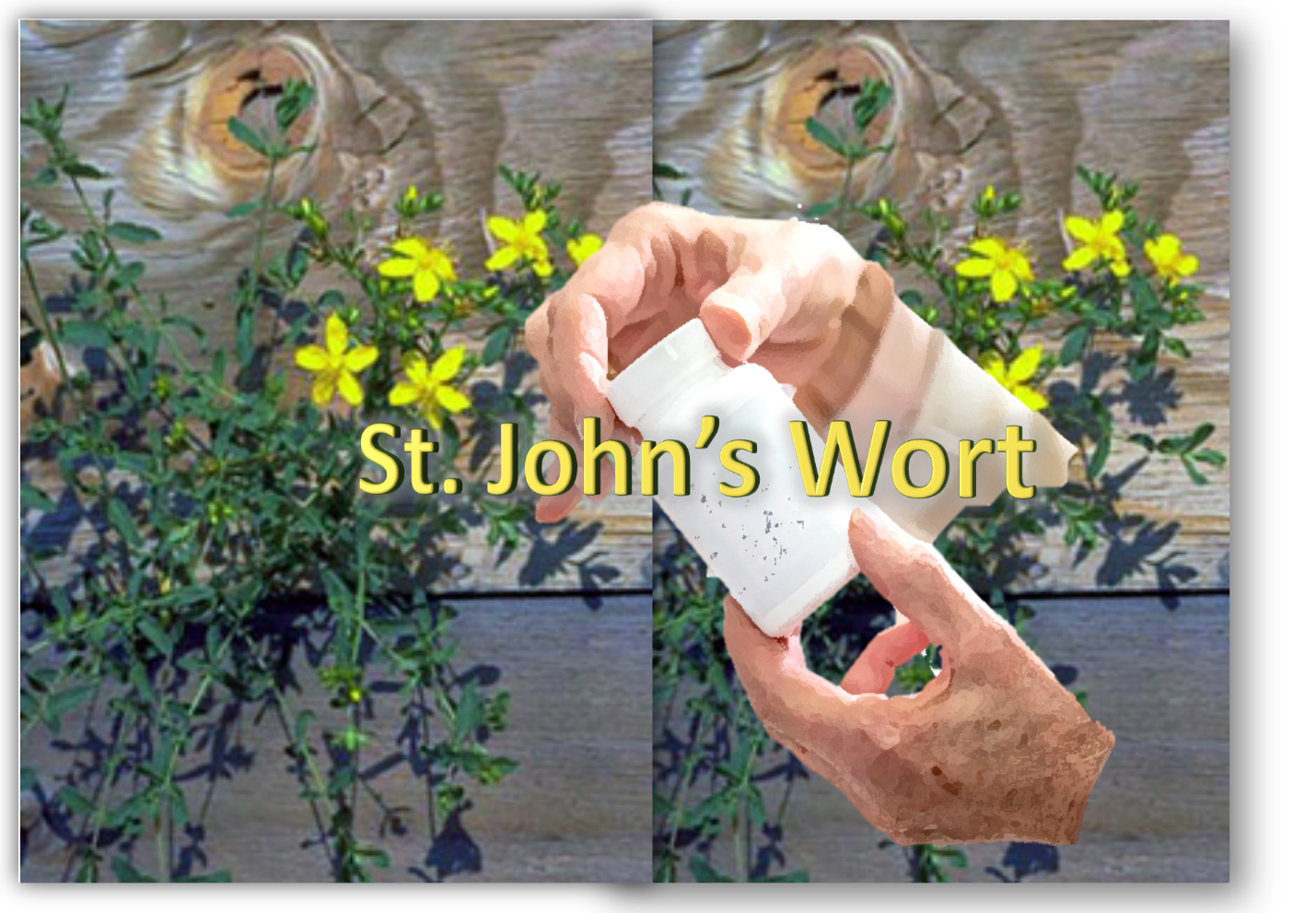
This mood-boosting herb, a native to Europe, western Asia, and North Africa that can be found growing in your backyard, is shown in studies to be as effective as a variety of different types of pharmaceutical antidepressants including tricyclics like amitriptyline 1, 2, SSRIs 3, 4, 5 like Prozac 6, Paxil 7 and Zoloft 8 as well as other types of antidepressant medications. 9
While St. John’s wort may be as effective as pharmaceutical antidepressants such as SSRIs like Prozac and Paxil, that might not be saying much about the efficacy of the botanical because the efficacy of SSRIs themselves have become the subject of much controversy.
How effective are antidepressant drugs?
In seeking to answer the question of whether the SSRI anti-depressants such as Zoloft and Prozac are effective—Harvard Medical School researcher Irving Kirsch analyzed published research data as well as unpublished drug company data obtained from the federal Food and Drug Administration (FDA). Kirsh’s analysis found that “Most (if not all) of the benefits are due to the placebo effect.” 10
The placebo effect is a benefit produced by a bogus pill that is inert such as a sugar pill that doesn’t contain any active medication. The benefits are not due to the inert sugar. Therefore, the benefits must be due to the patient’s belief in that treatment.
The review included an FDA study on the clinical trials of all antidepressants that the agency had approved between 1983 and 2008.” 11, 12 The small benefit of SSRIs found in some studies over and above placebo controls can be explained by study subjects learning that that they were taking the real drug and not a placebo, according to Kirsch. And he pointed out that any small benefit is so tiny that it would not make a recognizable difference in the outcome of depression treatment, according to the United Kingdom’s National Health Service effectiveness criteria. 13
The point here is not that these medications don’t help anyone. It’s about determining, scientifically, how effective St. John’s wort is at helping depressed people feel better. Both SSRIs and St. John’s wort have side-effects including withdrawal symptoms so we want to be able to assess, in any given individual, if the benefits outweigh any potential risk that the treatment could cause harm or unpleasant side effects. Depression is a serious medical condition and so if a treatment is working, sometimes the benefits can outweigh the harms.
Always consult a physician before stopping or starting any medications or supplements.
To Learn more about the possible ineffectiveness of SSRI antidepressants and their withdrawal effects, click this link: 5-HTP: Are antidepressants effective, and if so why?
Given the controversy regarding the efficacy of the pharmaceutical antidepressants, it is important to know how St. John’s wort—a plant that cannot be patented—performs when compared to a placebo. To know if the botanical is effective researchers can compare its effects to that of an inert, placebo pill, rather than to another medication like Prozac.
How effective is the herb compared to placebo?
Meta-analyses and individual clinical studies show that St. John’s wort is more effective than placebos. 14, 15, 16, 17, 18, 19 Not only is St. John’s wort better than inert pills, it is also as good as commonly prescribed antidepressant medications. The herb is recognized as effective by professionals who have no stake in its promotion.
In their 2016 guidelines, the American College of Physicians (ACP) states that “St. John’s wort may be as effective and better tolerated than conventional antidepressants for mild to moderate depression,” according to a peer-review report by expert panel at NatMed Pro. 20 The ACP guidelines cite nine studies showing “no difference in response or remission 21, 22, 23, 24, 25, 26, 27, 28, 29 when comparing treatment using SGAs [second-generation-antidepressants] with St. John’s wort” in patients with major depression.
But these ACP physicians rated the studies showing that St. John’s wort is as effective as antidepressants like Zoloft as low quality, asserting that dosing of the pharmaceuticals was “capped at levels lower than usual dosing ranges in comparative studies.” 30 However, the ACP rated the studies that found St. John’s wort is “better tolerated than the pharmaceuticals” as moderate quality. 31
That means that the ACP doctors have more confidence that St. John’s wort causes fewer side effects than pharmaceuticals than they do that it is as effective as the drugs. But a few months after the ACP guidelines where published, a systematic review and meta-analysis concluded that St. John’s wort for mild and moderate depression “is superior to placebo in improving depression symptoms and not significantly different from antidepressant medication.” 32
The ACP physicians said that patients may not be able to get St. John’s wort of “similar effectiveness” as was used in studies. 33 But that seems unlikely because numerous St. John’s wort studies use commercially available St. John’s wort products.
While this concept that commercial herbal supplements that are of sufficient potency are unavailable in the US market may not hold water, the ACP physicians importantly point out that St. John’s wort is associated with potentially dangerous drug–drug interactions.
What about side effects?
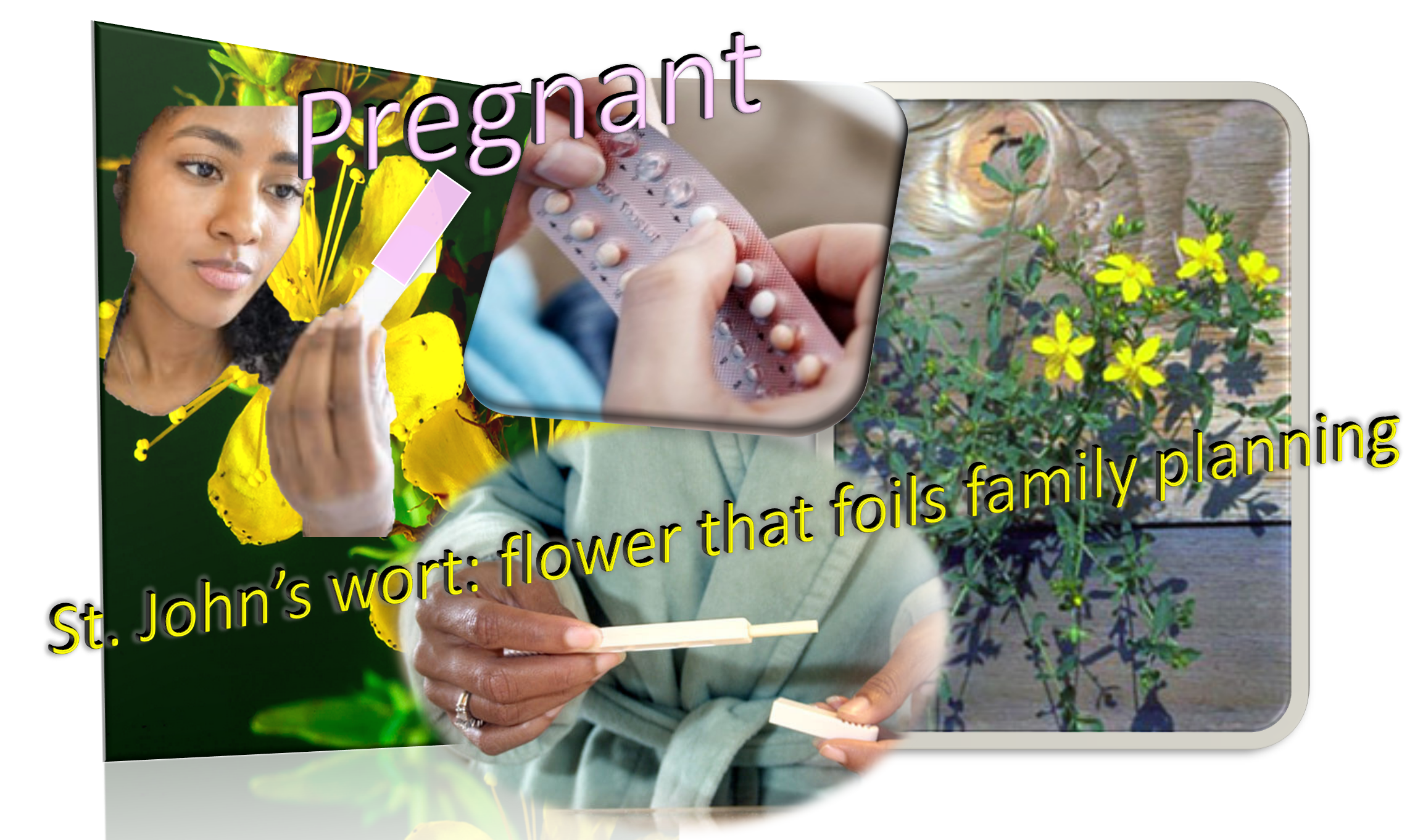
St. John’s wort supplements can decrease the efficacy of some drugs, such as oral contraceptives and immunosuppressants used to prevent transplant rejection or to control autoimmune conditions. The herb can cause dangerous side effects in patients on drugs called monoamine oxidase inhibitors (MAOIs) like Emsam (selegiline) or selective serotonin reuptake inhibitors (SSRI) like Zoloft (sertraline). 34
Limits to St. John’s Wort’s Efficacy
There are limits to the effectiveness of St. John’s wort. Observations studies show that between 65% and 100% of people taking St. John’s wort on a short-term basis report they get a benefit whereas, when taking it long-term only from 60% to 69% report a benefit, according to expert peer-review report from NatMed Pro. 35, 36 This could mean that the herb may not maintain its efficacy over time.
St. John’s wort may not be effective in people who are severely depressed, studies show. 37, 38

Classifications systems used to grade depression severity—such as the Diagnostic and Statistical Manual of Mental Disorders, (DSM-5-TR) and the ICD-10/11, the international standard that physicians use to classify and code medical diagnoses—look at how much difficulty an individual has continuing to function in personal, family, social, educational, occupational, or other important life areas. When the individual has trouble functioning in most life areas or when symptoms make it extremely difficult for them to complete daily tasks, maintain relationships, and engage in regular activities it can be classified as a severe depression.
The above description is for educational purposes and is not intended to replace the diagnosis by a qualified medical professional.
St. John’s Wort Side Effects the Same as Sugar Pills?
St. John’s wort offers a more tolerable option than the most frequently prescribed pharmaceuticals used to treat depression, the SSRI antidepressants such as Prozac, Paxil, Zoloft and Celexa. This is important since many people cannot tolerate the side effects of the medications.
Side-effects and adverse reactions are a major reason for discontinuing use of SSRI antidepressants. One study reported that 38% of 700 patients taking SSRIs told their doctors that they had experienced side effects with the most common being problems with sexual functioning, drowsiness, and weight gain in that order. (14 of 700 reported insomnia). 39 About a quarter of those reporting side effects said they were either very bothersome or extremely bothersome.
St. John’s wort has been shown to have less gastrointestinal, neurological, and sexual adverse effects than pharmaceutical antidepressants. 40
A prestigious Cochrane review of 17 randomized, controlled trials comparing St. John’s wort to SSRIs found patients taking St. John’s wort dropped out less frequently because of adverse events than patients taking SSRIs. This review—including a total 5489 patients—concluded that St. John’s wort is “similarly effective as standard antidepressants” and has “fewer side effects.” 41
In St. John’s wort studies, the number of participants dropping out of the studies due to adverse effects of the herb plus those reporting side effects was about the same as the number of people who dropped out for the same reasons but were instead unknowingly taking a bogus placebo pill (sugar pill) that contained no St. John’s wort. 42, 43
How does St. John’s wort’s stack up against other supplements?
St. John’s wort received the top rating for a stand-alone, herbal treatment of mild-to-moderate, unipolar depression in clinical guidelines from the World Federation of Societies of Biological Psychiatry (WFSBP) and the Canadian Network for Mood and Anxiety Disorders (CANMAT) involving 31 leading academics and clinicians from 15 countries. 44
It’s good to keep in mind that supplement safety and effectiveness is predicated on the dosage taken. “The CANMAT Taskforce recommendation is for specific formulations of 3:1 to 7:1 extracts, standardized to approximately 0.2-0.3% hypericin and/or 5-6% hyperforin, in single or divided doses of 600 mg to 1800 mg daily”, according to expert panel at NatMed Pro. 45 This refers to how the supplement is made including the methods manufacturers use to ensure a specific potency of active ingredients in the supplement.
St. John’s wort, taken at high doses can cause toxicity and skin reactions. St. John’s wort is likely safe “when used orally and appropriately. St. John’s wort extracts in doses up to 900 mg daily seem to be safe when used for up to 12 weeks. Some evidence also shows that St. John’s wort can be safely used for over one year,” according to an expert panel at NatMed Pro, 46
Omega-3 fatty acids from fish oil was the highest rated nutritional treatments for unipolar depression in the guidelines based on WFSBP and CANMAT’s 2-year review of studies on natural medicines for major psychiatric disorders. The herbal treatment, St. John’s wort—not not the nutritional treatment, omega-3 fatty acids—was recommended as a stand-alone treatment in these guidelines. 47
Supplements and medications may be best used in combination with talk therapies like cognitive behavioral therapy.
After reviewing studies on natural medicines for major psychiatric disorders, the global-expert guidelines from CANMAT didn’t endorse tryptophan or 5-HTP (5-hydroxytryptophan) as a nutritional treatment for unipolar depression. But the guidelines don’t specifically caution against their use for this purpose. There is more evidence for 5-HTP’s efficacy for depression than there is for tryptophan. The guidelines acknowledge that 5-HTP—not tryptophan—is “the preferred form as a precursor of serotonin”. 48
To learn more about 5-HTP’s efficacy for depression, click link: 5-HTP: Are antidepressants effective, and if so why?
That St. John’s wort is more tolerable than antidepressant medications, doesn’t mean that it’s side-effect free. The major downside to St. John’s wort is that it can interact with many pharmaceutical medications, changing how well they work in potentially dangerous ways. Taking an antidepressant like Prozac and St. John’s wort at the same time could be dangerous.
The above does not replace medical advice from a physician. Always consult with a physician before starting or stopping any medications or supplements including St. John’s wort.
To find out about St. John’s wort safety, side-effects and drug interactions, click link below:
There are ways to help depression and insomnia without any risk of side effects or dangerous drug interactions. To be clear, activities like exercise, mindfulness meditation, modifying your stress and exposing oneself to varied experiences can have just as profound biological effects on your body as taking a drug or supplement. And the ways they work to help depression overlap.
To find out how to get the benefits of St. John’s wort without side effects or drug interactions, click link below:
Care informed by the understanding that emotional and physical wellbeing are deeply connected
________________________________________________________________________________________________________________
The information provided on this site is for educational purposes only; it is not medical advice and should not be substituted for professional medical advice.
By using MoodChangeMedicine.com, you agree to accept this website’s terms of use, which can be viewed here.
Citations
- Linde K, Berner MM, Kriston L: “St John’s wort for major depression.” Cochrane Database Syst Rev. 2008;4: CD000448. ↩︎
- Woelk H. “Comparison of St. John’s wort and imipramine for treating depression: randomized controlled trial.” BMJ. 2000. ;321:536-9.” View abstract. ↩︎
- Linde K, Berner MM, Kriston L: “St John’s wort for major depression.” Cochrane Database Syst Rev. 2008;4: CD000448. ↩︎
- Rahimi, R., Nikfar, S., and Abdollahi, M. “Efficacy and tolerability of Hypericum perforatum in major depressive disorder in comparison with selective serotonin reuptake inhibitors: a meta-analysis.” Prog.Neuropsychopharmacol.Biol.Psychiatry. 2009. 2-1-2009;33(1):118-127. View abstract. ↩︎
- Asher GN, Gartlehner G, Gaynes BN, et al. “Comparative Benefits and Harms of Complementary and Alternative Medicine Therapies for Initial Treatment of Major Depressive Disorder: Systematic Review and Meta-Analysis.” J Altern Complement Med. 2017;23(12):907-19. View abstract. ↩︎
- Harrer G, Schmidt U, Kuhn U, Biller A. “Comparison of equivalence between the St. John’s wort extract LoHyp-57 and fluoxetine.” Arzneimittelforschung. 1999;49:289-96. View abstract. ↩︎
- Szegedi A, Kohnen R, Dienel A, Kieser M. “Acute treatment of moderate to severe depression with hypericum extract WS 5570 (St. John’s wort): randomised controlled double blind non-inferiority trial versus paroxetine.” BMJ. 2005;330:503. [PMID: 15708844] Crossref PubMed Google Scholar ↩︎
- Brenner R, Azbel V, Madhusoodanan S, Pawlowska M. “Comparison of an extract of hypericum (LI 160) and sertraline in the treatment of depression: a double-blind, randomized pilot study.” Clin Ther. 2000;22:411-9. [PMID: 10823363] Crossref PubMed Google Scholar ↩︎
- Harrer, G., Hubner, W. D., and Podzuweit, H. “Effectiveness and tolerance of the hypericum extract LI 160 compared to maprotiline: a multicenter double-blind study.” J.Geriatr.Psychiatry Neurol. 1994;7 Suppl 1:S24-S28. View abstract. ↩︎
- Kirsch I. “Antidepressants and the Placebo Effect.” Z Psychol. 2014;222(3):128-134. doi: 10.1027/2151-2604/a000176. PMID: 25279271; PMCID: PMC4172306 ↩︎
- Khin N. A., Chen Y. F., Yang Y., Yang P., & Laughren T. P. “Exploratory analyses of efficacy data from major depressive disorder trials submitted to the US Food and Drug Administration in support of new drug applications.” Journal of Clinical Psychiatry. (2011). 72, 464–472. doi: 10.4088/JCP.10m06191 [PubMed] [Google Scholar] ↩︎
- Kirsch I. “Antidepressants and the Placebo Effect.” Z Psychol. 2014;222(3):128-134. doi: 10.1027/2151-2604/a000176. PMID: 25279271; PMCID: PMC4172306. ↩︎
- Kirsch I. “Antidepressants and the Placebo Effect.” Z Psychol. 2014;222(3):128-134. doi: 10.1027/2151-2604/a000176. PMID: 25279271; PMCID: PMC4172306. ↩︎
- Kalb, R., Trautmann-Sponsel, R. D., and Kieser, M. “Efficacy and tolerability of hypericum extract WS 5572 versus placebo in mildly to moderately depressed patients. A randomized double-blind multicenter clinical trial.” Pharmacopsychiatry. 2001;34(3):96-103. View abstract. ↩︎
- Kasper, S., Volz, H. P., Moller, H. J., Dienel, A., and Kieser, M. “Continuation and long-term maintenance treatment with Hypericum extract WS 5570 after recovery from an acute episode of moderate depression–a double-blind, randomized, placebo controlled long-term trial.” Eur.Neuropsychopharmacol. 2008;18(11):803-813. View abstract. ↩︎
- Linde K, Berner MM, Kriston L: “St John’s wort for major depression.” Cochrane Database Syst Rev 2008;4: CD000448. ↩︎
- Schrader E, Meier B, and Brattstrom A. “Hypericum treatment of mild-moderate depression in a placebo-controlled study. A prospective, double-blind, randomized, placebo-controlled, multicentre study.” Human Psychopharm. 1998;13:163-169. ↩︎
- Pakseresht S, Boustani H, Azemi ME, et al. “Evaluation of pharmaceutical products of St. John’s wort efficacy added on tricyclic antidepressants in treating major depressive disorder: a double blind randomized control trial.” Jundishapur.J.Nat.Pharm.Prod. 2012;7(3):106-10. View abstract. ↩︎
- Apaydin EA, Maher AR, Shanman R, et al. “A systematic review of St. John’s wort for major depressive disorder.” Syst Rev. 2016;5(1):148. View abstract. ↩︎
- “St. John’s Wort Monograph” NatMed Pro Therapeutic Research Center database. current through 3/8/2024. Last modified on 3/7/2024. Accessed June, 2024. ↩︎
- Hypericum Depression Trial Study Group. “Effect of Hypericum perforatum (St. John’s wort) in major depressive disorder: a randomized controlled trial.” JAMA. 2002;287:1807-14. [PMID: 11939866] Crossref PubMed Google Scholar ↩︎
- Szegedi A, Kohnen R, Dienel A, Kieser M. “Acute treatment of moderate to severe depression with hypericum extract WS 5570 (St. John’s wort): randomised controlled double blind non-inferiority trial versus paroxetine.” BMJ. 2005;330:503. [PMID: 15708844] Crossref PubMed Google Scholar ↩︎
- Brenner R, Azbel V, Madhusoodanan S, Pawlowska M. “Comparison of an extract of hypericum (LI 160) and sertraline in the treatment of depression: a double-blind, randomized pilot study.” Clin Ther. 2000;22:411-9. [PMID: 10823363] Crossref PubMed Google Scholar ↩︎
- Schrader E. “Equivalence of St. John’s wort extract (Ze 117) and fluoxetine: a randomized, controlled study in mild-moderate depression.” Int Clin Psychopharmacol. 2000;15:61-8. [PMID: 10759336] Crossref PubMed Google Scholar ↩︎
- Gastpar M, Singer A, Zeller K. “Comparative efficacy and safety of a once-daily dosage of hypericum extract STW3-VI and citalopram in patients with moderate depression: a double-blind, randomised, multicentre, placebo-controlled study.” Pharmacopsychiatry. 2006;39:66-75. [PMID: 16555167] Crossref PubMed Google Scholar ↩︎
- Gastpar M, Singer A, Zeller K. “Efficacy and tolerability of hypericum extract STW3 in long-term treatment with a once-daily dosage in comparison with sertraline.” Pharmacopsychiatry. 2005;38:78-86. [PMID: 15744631] Crossref PubMed Google Scholar ↩︎
- Behnke K, Jensen GS, Graubaum HJ, Gruenwald J. “Hypericum perforatum versus fluoxetine in the treatment of mild to moderate depression.” Adv Ther. 2002;19:43-52. [PMID: 12008860] Crossref PubMed Google Scholar ↩︎
- Bjerkenstedt L, Edman GV, Alken RG, Mannel M. “Hypericum extract LI 160 and fluoxetine in mild to moderate depression: a randomized, placebo-controlled multi-center study in outpatients.” Eur Arch Psychiatry Clin Neurosci. 2005;255:40-7. [PMID: 15538592] Crossref PubMed Google Scholar ↩︎
- van Gurp G, Meterissian GB, Haiek LN, McCusker J, Bellavance F. “St. John’s wort or sertraline? Randomized controlled trial in primary care.” Can Fam Physician. 2002;48:905-12. [PMID: 12053635] PubMed Google Scholar ↩︎
- Qaseem A, Barry MJ, Kansagara D, et al. “Nonpharmacologic versus pharmacologic treatment of adult patients with major depressive disorder: a clinical practice guideline from the American College of Physicians.” Ann Intern Med. 2016;164(5):350-9. View abstract. ↩︎
- Qaseem A, Barry MJ, Kansagara D, et al. “Nonpharmacologic versus pharmacologic treatment of adult patients with major depressive disorder: a clinical practice guideline from the American College of Physicians.” Ann Intern Med. 2016;164(5):350-9. View abstract. ↩︎
- Apaydin EA, Maher AR, Shanman R, et al. “A systematic review of St. John’s wort for major depressive disorder.” Syst Rev. 2016;5(1):148. View abstract. ↩︎
- Qaseem A, Barry MJ, Kansagara D, et al. “Nonpharmacologic versus pharmacologic treatment of adult patients with major depressive disorder: a clinical practice guideline from the American College of Physicians.” Ann Intern Med. 2016;164(5):350-9. View abstract. ↩︎
- Qaseem A, Barry MJ, Kansagara D, et al. “Nonpharmacologic versus pharmacologic treatment of adult patients with major depressive disorder: a clinical practice guideline from the American College of Physicians.” Ann Intern Med. 2016;164(5):350-9. View abstract. ↩︎
- “St. John’s Wort Monograph” NatMed Pro Therapeutic Research Center database. current through 3/8/2024. Last modified on 3/7/2024. Accessed June, 2024. ↩︎
- Linde K, Knuppel L. “Large-scale observational studies of hypericum extracts in patients with depressive disorders – a systematic review.” Phytomedicine 2005;12:148-57. View abstract. ↩︎
- Shelton RC, Keller MB, Gelenberg A, et al. “Effectiveness of St. John’s wort in major depression: A randomized, placebo-controlled trial.” JAMA. 2001;285:1978-86. View abstract. ↩︎
- Hypericum Depression Trial Study Group. “Effect of Hypericum perforatum (St. John’s wort) in major depressive disorder: a randomized controlled trial.” JAMA. 2002;287:1807-14. [PMID: 11939866] Crossref PubMed Google Scholar ↩︎
- Cascade E, Kalali AH, Kennedy SH. “Real-World Data on SSRI Antidepressant Side Effects.” Psychiatry (Edgmont). 2009 Feb;6(2):16-8. PMID: 19724743; PMCID: PMC2719451. ↩︎
- Apaydin EA, Maher AR, Shanman R, et al. “A systematic review of St. John’s wort for major depressive disorder.” Syst Rev. 2016;5(1):148. View abstract. ↩︎
- Linde K, Berner MM, Kriston L: “St John’s wort for major depression.” Cochrane Database Syst Rev 2008;4: CD000448. ↩︎
- Knüppel L, Linde K: “Adverse effects of St. John’s Wort: A systematic review.” J Clin Psychiatry 2004;65:1470–1479. ↩︎
- Linde K, Berner MM, Kriston L: “St John’s wort for major depression.” Cochrane Database Syst Rev 2008;4: CD000448. ↩︎
- Sarris J, Ravindran A, Yatham LN, et al. “Clinician guidelines for the treatment of psychiatric disorders with nutraceuticals and phytoceuticals: The World Federation of Societies of Biological Psychiatry (WFSBP) and Canadian Network for Mood and Anxiety Treatments (CANMAT) Taskforce.” World J Biol Psychiatry. 2022; Jul;23(6):424-455. doi: 10.1080/15622975.2021.2013041. PMID: 35311615. ↩︎
- “St. John’s Wort Monograph” NatMed Pro Therapeutic Research Center database. current through 3/8/2024. Last modified on 3/7/2024. Accessed June, 2024. ↩︎
- “St. John’s Wort Monograph” NatMed Pro Therapeutic Research Center database. current through 3/8/2024. Last modified on 3/7/2024. Accessed June, 2024. ↩︎
- Sarris J, Ravindran A, Yatham LN, et al. “Clinician guidelines for the treatment of psychiatric disorders with nutraceuticals and phytoceuticals: The World Federation of Societies of Biological Psychiatry (WFSBP) and Canadian Network for Mood and Anxiety Treatments (CANMAT) Taskforce.” World J Biol Psychiatry. 2022; Jul;23(6):424-455. doi: 10.1080/15622975.2021.2013041. PMID: 35311615. ↩︎
- Sarris J, Ravindran A, Yatham LN, et al. “Clinician guidelines for the treatment of psychiatric disorders with nutraceuticals and phytoceuticals: The World Federation of Societies of Biological Psychiatry (WFSBP) and Canadian Network for Mood and Anxiety Treatments (CANMAT) Taskforce.” World J Biol Psychiatry. 2022; Jul;23(6):424-455. doi: 10.1080/15622975.2021.2013041. PMID: 35311615. ↩︎

 Mood Change Medicine
Discussion
No comments yet.