By using MoodChangeMedicine.com, you agree to accept this website’s terms of use, which can be viewed here.
June 29, 2024
By Joie Meissner ND, BCB-L
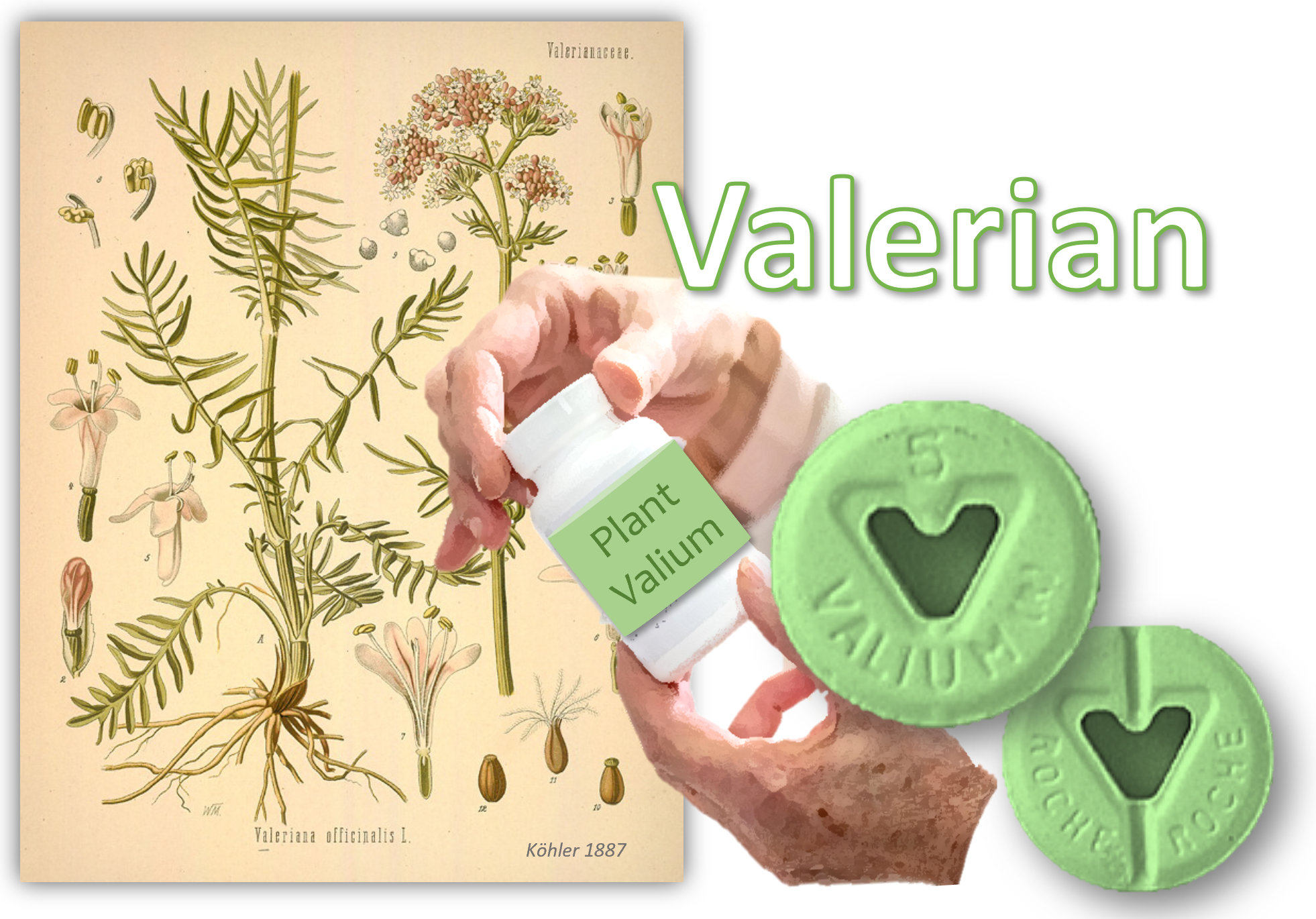
Use of this pungent botanical medicine—colloquially known as “plant Valium”—dates back to before 370 B.C. when Hippocrates wrote about the plant’s medicinal properties. 1 It is the most studied botanical medicine used to improve sleep. 2
Valerian may work by increasing the amount of a neurotransmitter in the brain called gamma-aminobutyric acid (GABA) or by working on GABA receptors. 3 But the herb has other actions that may also play a role in how valerian improves sleep. These include actions on the serotonin system and on adenosine, a metabolic breakdown product of the body’s main energy system. Serotonin is a mood-hormone which plays a role in sleep. Adenosine is the key neurochemical responsible for our sleep drive, the desire and ability to fall and remain asleep. 4

As the body uses its energy reserves, adenosine builds up and boosts our sleep drive. During sleep, the body flushes adenosine out of the brain allowing us to be alert and awake. That’s why a night of sleeplessness usually results in good sleep on the following night.
Valerian influences the serotonin system due to its effect on the specific serotonin receptors in the brain responsible for regulating the circadian rhythm. 5 Circadian rhythms are the body’s sleep clock.
VALERIAN SNAPSHOT

- Though there are number of studies that show that valerian doesn’t improve sleep, when you compare all the studies that show valerian does improve sleep against the ones that say it doesn’t, the ones that say the herb works carry the day. 6
- While the weight of the evidence shows that taking valerian whole root extract modestly improves sleep quality, it may not help one stay asleep longer, fall asleep quicker or improve one’s overall sleep debt.
- Valerian can take up to 4 weeks of daily use to get the bedtime benefits. 7, 8
- Loss of potency due to issues with the herb’s shelf stability could be an issue. 9 This might make some valerian products more effective than others.
- Frequent use of sleeping pills such a prescription drugs like Ambien and Lunesta “is associated with an increased risk of mortality and shortened life expectancy,” according to a 2023 study. Click link to learn more about Dietary Supplements vs. Sleeping Pills: The Pros & Cons
- Valium and Xanax—anti-anxiety drugs called benzodiazepines—are addictive and abrupt withdrawal can be life-threatening.
- Valerian—when used short term and in appropriate doses—is likely safer than taking benzodiazepines or chronic use of sleeping pills. The herb has been used to help people experiencing withdrawal effects of these medications.
- Cognitive Behavioral Therapy for Insomnia (CBT-I) works better and is far safer than any prescription drug or herbal supplement for the treatment of insomnia. The improvements in sleep from participating in a CBT-I program are more enduring than can be obtained from any drug or supplement. Click link to learn more about Cognitive Behavioral Therapy for Insomnia.
- Valerian is likely safe when taken at appropriate doses on a short-term basis such as at the start of a CBT-I program. But the safety of taking the herb beyond 6 weeks is unknown. This botanical medicine may not be safe for all people.
- Compared to pharmaceutical sleep medications, valerian might offer some people an alternative to sleep drugs as it appears to have lower risks of serious side effects and adverse events.
- Though valerian toxicity has been rarely reported, this herb has a superior safety profile than some other natural sleep aids like kava—an herb that has been associated with numerous cases of hepatotoxicity. Kava had been banned from markets in Europe and Canada in 2002 with Drug Administration (FDA) issuing warning to consumers in that same year. Questions surrounding kava’s safety have yet to be resolved.
- Valerian may not work for everyone. Some people don’t like its bitter flavor or its flowery perfume-like smell. And some people have a paradoxical reaction; instead of getting better sleep, they get insomnia from taking it.
- Combination products with multiple herbs may improve sleep more than single-herb products, but they come with added safety risks of the herbs interacting with each other.
- When used chronically and abruptly stopped, symptoms of valerian withdrawal might include fast heart-rate, anxiety, irritability, and insomnia.
Information provided on this website is not a substitute for medical advice. Always consult your doctor before taking starting or stopping any supplement or medication.

It’s unknown if valerian is helpful for people with anxiety or depression because there are not enough high-quality studies to make that determination.

Cognitive Behavioral Therapy (CBT) is the gold-standard treatment for anxiety and depression. Some studies show it’s more effective than anything that can be taken by mouth. And there are no side effects from talk therapies like CBT. To learn more about the effectiveness of CBT in the treatment of anxiety and depression click link: First on List for Depression and Anxiety
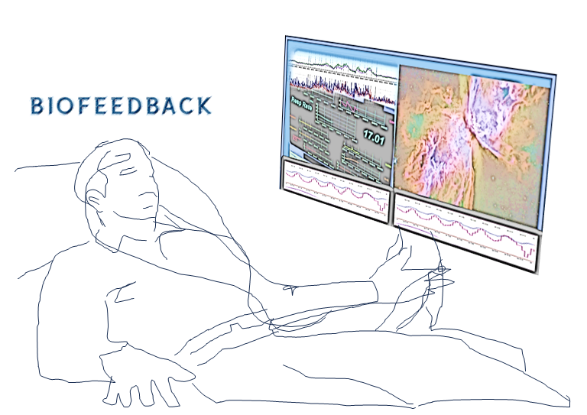
Biofeedback-Assisted Relaxation Therapy (BART) helps people reduce stress and anxiety. Biofeedback technology helps people learn to shift into a calm state and out of the physiology of stress that drives anxiety and depression and interferes with sleep. It helps people slow speedy hearts, quiet anxious breathing patterns and relax tense muscles. Skills learned though BART build a sense of empowerment and a sense of safety. BART helps people learn to ramp down the biological drivers of anxiety and depression. To learn more about how biofeedback helps people with anxiety and depression click link: How to De-Stress Your Way Out of Anxiety and Depression
For more information on valerian, click links below:
How effective is valerian for insomnia?
Plant Valium: Is valerian effective for anxiety?

To find out how effective valerian is for insomnia, click link below:
Care informed by the understanding that emotional and physical wellbeing are deeply connected
________________________________________________________________________________________________________________
By using MoodChangeMedicine.com, you agree to accept this website’s terms of use, which can be viewed here.
Citations
- “Valerian” Fact Sheet for Health Professionals Updated: March 15, 2013, accessed June 2024 ↩︎
- Guadagna S, Barattini DF, Rosu S, Ferini-Strambi L. “Plant Extracts for Sleep Disturbances: A Systematic Review.” Evid Based Complement Alternat Med. 2020 Apr 21;2020:3792390. doi: 10.1155/2020/3792390. PMID: 32382286; PMCID: PMC7191368 ↩︎
- Cavadas C, Araujo I, Cotrim MD, et al. “In vitro study on the interaction of Valeriana officinalis L. extracts and their amino acids on GABAA receptor in rat brain.” Arzneimittel-Forschung Drug Research 45: 753-755, 1995. [PubMed abstract] ↩︎
- Vissiennon Z, Sichardt K, Koetter U, et al. “Valerian extract Ze 911 inhibits postsynaptic potentials by activation of adenosine A1 receptors in rat cortical neurons.” Planta Med. 2006;72(7):579-83. View abstract. ↩︎
- Dietz BM, Mahady GB, Pauli GF, Farnsworth NR. “Valerian extract and valerenic acid are partial agonists of the 5-HT5a receptor in vitro.” Brain Res Mol Brain Res. 2005 Aug 18;138(2):191-7. doi: 10.1016/j.molbrainres.2005.04.009. PMID: 15921820; PMCID: PMC5805132. ↩︎
- “Valerian”. NatMed Pro Therapeutic Research Center database. current through 4/12/2024. Last modified 8/9/2023. Accessed June, 2024. ↩︎
- Stevinson C, Ernst E. “Valerian for insomnia: a systematic review of randomized clinical trials.” Sleep Med. 2000;1:91-9. ↩︎
- Shinjyo N, Waddell G, Green J “Valerian Root in Treating Sleep Problems and Associated Disorders-A Systematic Review and Meta-Analysis.” J Evid Based Integr Med. 2020. 2020;25:2515690X20967323. ↩︎
- Shinjyo N, Waddell G, Green J. “Valerian Root in Treating Sleep Problems and Associated Disorders-A Systematic Review and Meta-Analysis.” J Evid Based Integr Med. 2020 Jan-Dec;25:2515690X20967323. doi: 10.1177/2515690X20967323. PMID: 33086877; PMCID: PMC 7585905. ↩︎

 Mood Change Medicine
Discussion
No comments yet.