By using MoodChangeMedicine.com, you agree to accept this website’s terms of use, which can be viewed here.
April 25, 2024
BY Joie Meissner ND, BCB-L
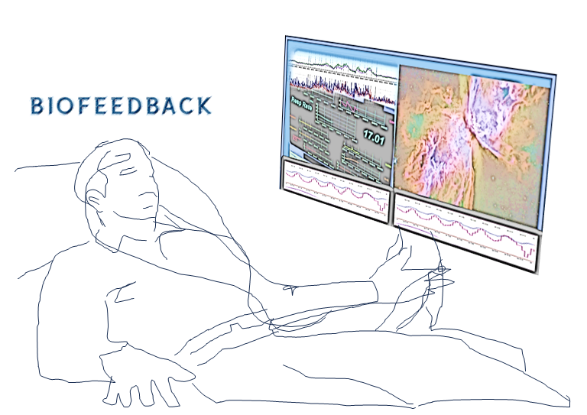
Biofeedback and Relaxation Therapy (RT) aim to alleviate stress, anxiety and depression by promoting a state of relaxation.
Biofeedback-Assisted Relaxation Therapy (BART) helps break that vicious cycle of anxiety by taking the body out of fight-or-flight into a more relaxed state. This can help shift the amygdala—the brain’s threat center sentinel—out of hyperactivation so that when stressors present themselves, it is not on hair-trigger resulting in heightened anxiety. Thus, it heads off anxiety before it can gain a foothold.
BART uses biofeedback technology to help people learn to shift out of the physiology of stress and anxiety into a calm state. It helps people slow speedy hearts, quiet anxious breathing patterns and relax tense muscles. These new skills build a sense of empowerment and safety. BART techniques include autogenic training (a form of self-hypnosis), guided imagery and progressive muscle relaxation.
Chronic stress does damage through the repeated activation of the fight-or-flight mechanisms of the body called the HPA axis, or hypothalamic-pituitary-adrenal axis. This causes a cascade of biochemical events leading to hyperactivation of inflammatory proteins that are linked to depression, anxiety, insomnia and a host of other conditions. 1, 2, 3, 4
Relaxation therapy is commonly used for stress management, which cuts inflammation. 5
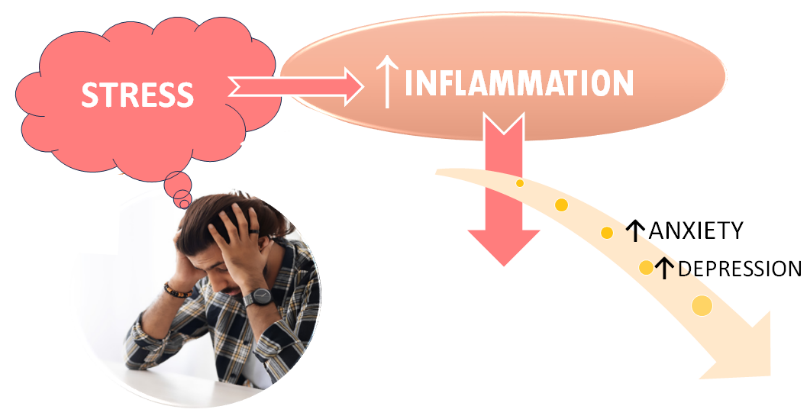
Inflammation has been implicated as an important part of the mechanism driving anxiety and depression. 6, 7, 8, 9
Inflammation—which can be caused by stress—and its cascade of biochemical consequences including decreases in the brain’s self-healing ability, might be the reason that antidepressants don’t work that well in patients with high levels of inflammation. 10 And it might also explain why patients that have elevated inflammation may not respond as well to talk-therapy. 11
There’s a smoking gun in the brain that’s at the center of a vicious cycle of stress leading to anxiety. It’s a sentinel in the brain whose job it is to keep us safe from threats: the amygdala.
The vicious cycle is set off by stress, which triggers activation of the amygdala, which in turn causes the release of fight-or-flight response chemicals. These chemicals trigger more inflammation, which sets off even more activation of the amygdala. The process feeds on itself leading to a hyperactive amygdala that reacts to the tiniest of stimuli and creates anxiety and depressive mood.

Biofeedback-Assisted Relaxation Therapy is a powerful tool to help people learn how to break out of the vicious cycle and calm and stressed body and mind.
Numerous studies show “relaxation therapy improves anxiety in patients with anxiety disorders and patients experiencing situational anxiety,” according to a panel of experts at NatMedPro. 12, 13, 14, 15, 16, 17
Relaxation therapy was found to have medium-high efficacy on the symptoms of anxiety by a meta-analysis of 16 randomized control trials. “The effect of relaxation therapy on symptoms of depression, phobia, and worry was significant” as well, the researchers wrote. “Relaxation therapy can be selected as a useful intervention for reducing negative emotions in people with anxiety disorders.” 18
Relaxation Therapy (RT) is efficacious for the treatment of both generalized anxiety and panic disorders, according to a meta-analysis of 5 clinical studies. RT was shown to be as effective as cognitive behavioral therapy, the gold-standard treatment for improving symptoms of anxiety in patients with generalized anxiety disorder. 19
Relaxation therapies as well as other counseling techniques are often combined with biofeedback to enhance efficacy and further defeat stress.
When our minds become stressed, our bodies also become stressed whether we notice that stress or not. Our breathing and heart rate increase and our muscles tighten, among other wide-spread effects. Biofeedback is a bridge between our conscious awareness and our stressed physiology allowing us to learn how to shift into a relaxed state. Biofeedback uses instruments to measure a variety of signals associated physiological functions like finger temperature and muscle tension in real time so you can learn to relax from the flight-or-fight stress response.
“Adding HRV biofeedback to psychotherapy can increase heart rate variability and augment treatment effects in various mental disorders,” according to a 2022 review of studies on HRV and its therapeutic modulation in the context of psychopharmacology as well as psychiatric and neurological disorders. 20 Abundant HRV is a sign of health and is thought to also reflect resilience and behavioral flexibility.
Heart rate variability (HRV) biofeedback is a specific form of biofeedback that measures heart rate and helps people learn how to vary heart rate in a particular way that shifts them out of the fight-or-flight state. Heart rate varies based on breathing and patients learn to change their breathing pattern to increase HRV using feedback from an audiovisual display. Learning to change breathing helps people shift into a calmer state, a skill that once learned can be applied when needed.
When our bodies shift from a stressed state, we can measure a drop in the stress hormone cortisol. Cortisol is your body’s stress manager, orchestrating responses to social, psychological and physical challenges.
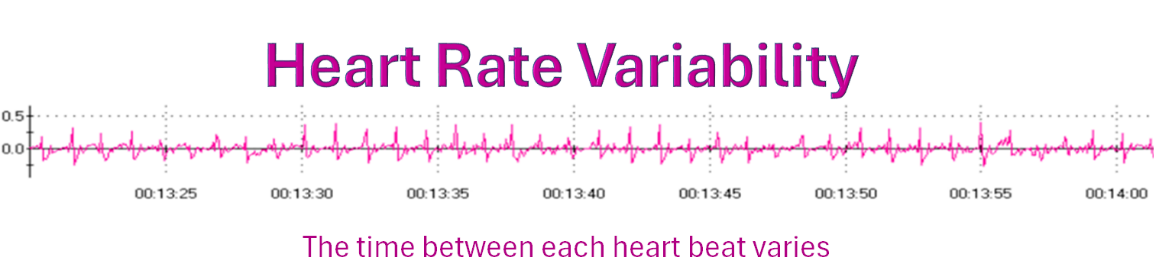
A 2023 study posed the question whether HRV biofeedback could lower levels of cortisol in female athletes. The athletes were given short sessions of heart rate variability biofeedback lasting six minutes, three times a day for seven weeks. Cortisol levels decreased significantly after biofeedback, the study found. HRV biofeedback is an effective method to control stress in female athletes, the researchers concluded. 21
“HRV [heart rate variability] biofeedback training is associated with a large reduction in self-reported stress and anxiety,” a 2017 analysis of 24 controlled studies totaling 484 participants concluded. 22
Fifty-two middle-aged patients with panic disorder receiving four weeks of HRV biofeedback showed reduced anxiety and increased HRV as compared to controls who were unchanged in a 2022 randomized controlled study. 23
Shifting the body into a physiologically relaxed state can change the way a person thinks and feels.
Depressive thinking resulted in changes in heart rate and perspiration that occur during times of elevated stress, a 2022 study found. After biofeedback training, levels of stress, anxiety, and depressive thinking fell and heart rate patterns consistent with relaxation rose. People in the control group showed no such improvements. 24
Heart rate variability biofeedback improves depressive symptoms, a 2021 analysis of 14 randomized controlled studies including 794 participants concluded. The researchers found it to be “a valid technique to increase psychological well-being.” 25
Hypnosis is another powerful tool used to de-stress and to enhance the efficacy of talk therapy.
To learn more about how hypnotherapy and hypnosis cut stress, reduces anxiety and depression click link below:
Care informed by the understanding that emotional and physical wellbeing are deeply connected
________________________________________________________________________________________________________________
By using MoodChangeMedicine.com, you agree to accept this website’s terms of use, which can be viewed here.
Citations
- Hassamal, Sameer. “Chronic stress, neuroinflammation, and depression: an overview of pathophysiological mechanisms and emerging anti-inflammatories.” Front. Psychiatry. 10 May 2023. Sec. Molecular Psychiatry Volume 14 – 2023. frontiersin.psychiatry/10.3389. ↩︎
- Dzierzewski JM, Donovan EK, Kay DB, Sannes TS, Bradbrook KE. Sleep Inconsistency and Markers of Inflammation. Front Neurol. 2020 Sep 16;11:1042. doi: 10.3389/fneur.2020.01042. PMID: 33041983; PMCID: PMC7525126. https://www.ncbi.nlm.nih.gov/pmc/articles/PMC7525126/ ↩︎
- Irwin MR, Olmstead R, Carroll JE. Biol Psychiatry. 2016;80:40‐52. [PMC free article] [PubMed] [Google Scholar] ↩︎
- Miao Z, Wang Y, Sun Z. “The Relationships Between Stress, Mental Disorders, and Epigenetic Regulation of BDNF.” Int J Mol Sci. 2020 Feb 18;21(4):1375. doi: 10.3390/ijms21041375. PMID: 32085670; PMCID: PMC7073021. ↩︎
- Maydych V. “The Interplay Between Stress, Inflammation, and Emotional Attention: Relevance for Depression.” Front Neurosci. 2019 Apr 24;13:384. doi: 10.3389/fnins.2019.00384. PMID: 31068783; PMCID: PMC6491771. ↩︎
- Cowen PJ, Browning M. “What has serotonin to do with depression?” World Psychiatry. 2015 Jun;14(2):158-60. doi: 10.1002/wps.20229. PMID: 26043325; PMCID: PMC4471964. ↩︎
- Berk M, Williams LJ, Jacka FN, O’Neil A, et al. “So depression is an inflammatory disease, but where does the inflammation come from?” BMC Med. 2013 Sep 12;11:200. doi: 10.1186/1741-7015-11-200. PMID: 24228900; PMCID: PMC3846682. ↩︎
- Pitsavos C, Panagiotakos DB, Papageorgiou C, Tsetsekou E, Soldatos C, Stefanadis C. “Anxiety in relation to inflammation and coagulation markers, among healthy adults: the ATTICA study.” Atherosclerosis. 2006 Apr;185(2):320-6. doi: 10.1016/j.atherosclerosis.2005.06.001. Epub 2005 Jul 11. PMID: 16005881 ↩︎
- Hu P, Lu Y, Pan BX, Zhang WH. “New Insights into the Pivotal Role of the Amygdala in Inflammation-Related Depression and Anxiety Disorder.” Int J Mol Sci. 2022 Sep 21;23(19):11076. doi: 10.3390/ijms231911076. PMID: 36232376; PMCID: PMC9570160. ↩︎
- Cowen PJ, Browning M. “What has serotonin to do with depression?” World Psychiatry. 2015 Jun;14(2):158-60. doi: 10.1002/wps.20229. PMID: 26043325; PMCID: PMC4471964. ↩︎
- Strawbridge R, Marwood L, King S, et al. “Inflammatory Proteins and Clinical Response to Psychological Therapy in Patients with Depression: An Exploratory Study.” J Clin Med. 2020 Dec 2;9(12):3918. doi: 10.3390/jcm9123918. PMID: 33276697; PMCID: PMC7761611. ↩︎
- “Relaxation Therapy Monograph” NatMedPro Therapeutic Research Center database. 1/14/2022 last modified 3/31/2022., accessed March 2024 ↩︎
- Gagne D, Toye RC. “The effects of therapeutic touch and relaxation therapy in reducing anxiety.” Arch Psychiatr Nurs. 1994;8(3):184-9. View abstract. ↩︎
- Manzoni GM, Pagnini F, Castelnuovo G, Molinari E. “Relaxation training for anxiety: a ten-years systematic review with meta-analysis.” BMC Psychiatry. 2008;8:41. View abstract. ↩︎
- Kim HS, Kim EJ. “Effects of Relaxation Therapy on Anxiety Disorders: A Systematic Review and Meta-analysis.” Arch Psychiatr Nurs. 2018;32(2):278-284. View abstract. ↩︎
- Ibrahim A, Koyuncu G, Koyuncu N, Suzer NE, Cakir OD, Karcioglu O. “The effect of Benson relaxation method on anxiety in the emergency care.” Medicine (Baltimore). 2019;98(21):e15452. View abstract. ↩︎
- Zenouzi A, Moghadam ZB, Babayanzad S, Asghari M, Rezaei E. “The effect of Benson relaxation technique on stress, anxiety, and depression in pregnant women.” Holist Nurs Pract 2021. View abstract. ↩︎
- Kim HS, Kim EJ. “Effects of Relaxation Therapy on Anxiety Disorders: A Systematic Review and Meta-analysis.” Arch Psychiatr Nurs. 2018;32(2):278-284. View abstract. ↩︎
- Siev J, Chambless DL. “Specificity of treatment effects: cognitive therapy and relaxation for generalized anxiety and panic disorders.” J Consult Clin Psychol. 2007;75(4):513-22. View abstract. ↩︎
- Siepmann M, Weidner K, Petrowski K, Siepmann T. “Heart Rate Variability: A Measure of Cardiovascular Health and Possible Therapeutic Target in Dysautonomic Mental and Neurological Disorders.” Appl Psychophysiol Biofeedback. 2022 Dec;47(4):273-287. doi: 10.1007/s10484-022-09572-0. Epub 2022 Nov 22. PMID: 36417141; PMCID: PMC9718704. ↩︎
- Makaracı Y, Makaracı M, Zorba E, Lautenbach F. “A Pilot Study of the Biofeedback Training to Reduce Salivary Cortisol Level and Improve Mental Health in Highly-Trained Female Athletes.” Appl Psychophysiol Biofeedback. 2023 Sep;48(3):357-367. doi: 10.1007/s10484-023-09589-z. Epub 2023 May 19. PMID: 37204539. ↩︎
- Goessl VC, Curtiss JE, Hofmann SG. “The effect of heart rate variability biofeedback training on stress and anxiety: a meta-analysis.” Psychol Med. 2017 Nov;47(15):2578-2586. doi: 10.1017/S0033291717001003. Epub 2017 May 8. PMID: 28478782. ↩︎
- Herhaus B, Siepmann M, Kahaly G, Conrad R, Petrowski K. “Effect of a biofeedback intervention on heart rate variability in individuals with panic disorder: A randomized controlled trial.” Psychosomatic Medicine. 2022;84(2):199–209. doi: 10.1097/PSY.0000000000001031. [PubMed] [CrossRef] [Google Scholar] ↩︎
- Schumann A, Helbing N, Rieger K, Suttkus S, Bär KJ. “Depressive rumination and heart rate variability: A pilot study on the effect of biofeedback on rumination and its physiological concomitants.” Front Psychiatry. 2022 Aug 25;13:961294. doi: 10.3389/fpsyt.2022.961294. PMID: 36090366; PMCID: PMC9452722. ↩︎
- Pizzoli SFM, Marzorati C, Gatti D, Monzani D, Mazzocco K, Pravettoni G. “A meta-analysis on heart rate variability biofeedback and depressive symptoms.” Sci Rep. 2021 Mar 23;11(1):6650. doi: 10.1038/s41598-021-86149-7. PMID: 33758260; PMCID: PMC7988005. ↩︎

 Mood Change Medicine
Discussion
No comments yet.